I saw some liberal responses to an Instagram video by Chris Packham; where they say basically “I voted for Labour because I thought they would turn it all around, but they turned out to be just as shit as the Tories”.
This shit broke me. It’s the most angry I’ve felt for quite a while. I haven’t been that angry about Trump. I’ve just been like “ah yeah ok” every time I’ve been told about the latest executive action Trump has introduced. I’m just entirely apathetic about it. Obviously I’ve been feeling for those innocent people impacted by these fascist policies. But I knew everything they would do, and I just generally prepared myself mentally for the worst policies I could imagine. So nothing shocked or surprised me in the slightest.
But when it comes to liberal voters and politicians; they really infuriate me. Obviously it’s the same all over the world; but considering I’m British, I’ll talk about the situation here specifically. The way Jeremy Corbyn and the left in general have been treated by so called Labour and the media is just nauseating. And then on top of that, the way we were ignored at every single point, when we were right at EVERY SINGLE POINT is unforgivable. This isn’t them saying “you were right about Jeremy Corbyn. You were right about Starmer. You were right to vote for Rebecca Long-Bailey.” This is “we fucked up by voting for Starmer” and nothing more. It’s like when they say nothing before October 7th is relevant when it comes to Palestine. They ignore history to justify the unjustifiable in their minds. They’ll never accept the left was right and they were wrong about anything (let alone everything).
They would rather play dumb and pretend that Labour under Starmer was always a social democratic proposition; until it suddenly wasn’t. It wasn’t an extreme neoliberal government in waiting from the very beginning in 2020 (5 years ago!) It wasn’t a party that offered nothing to voters because they knew as long as they remained alive, and gave away practically nothing on future policy; that by election day that they’d be in number 10 and 11 Downing Street. We can talk about the Tories making it inevitable that Labour would take over, and the media who ignored the only party that had policies that made actual sense (or any serious policy at all), the Green Party.
But at the end of the day, a special fuck you goes out to the liberal voters. The ignorant, insufferable morons who insisted that they knew better than us. They knew better about the economy. They knew better about the climate. They knew better about nature. They knew better about antisemitism. They knew better about protest. They knew better about politics and political strategy.
Except they didn’t. And they still can’t accept that they don’t. They never will, regardless of what goes wrong.
Fuck these people! I’m never listening to any of them again. Nor the liberal media, who are probably at fault more than any voters. I don’t know. There’s just something about liberal voters realising they fucked up but never taking any responsibility that particularly pisses me off.
Either way, they all need to own everything that happens from here on in. It’s nothing to do with the left. Climate breakdown and collapse. It’s on them. Fascism and the removal of all of our rights in the meantime. It’s on them.
If you’re reading this and you’re a neoliberalism enabler; it’s all on you. We’re always told that we need to go further to the right, even though capitalist ideology has failed time and time again. Ok, you win. The world is going fascist. You got what you wanted. Now let’s see you take responsibility for once. No one is going to believe you this time, when you inevitably try to blame the left for your utter failure; and the destruction of our only home.
I’m not even sure how far fetched it is to imagine a TV newsreader in a destroyed and smouldering newsroom in the future blaming Jeremy Corbyn and the left for our destruction at the hands of the fascists. That’s how insane our world now is.
Ok thanks for reading. See you next time on my blog.
Seriously though, I did wonder if this is really a post worth writing, since, along with most other problems in our world; capitalism is the obvious cause. In the end, I did decide I could offer enough specifics to make it worth doing, so here we go.
The things I’m going to suggest could technically be done under capitalism. But we all know they won’t be. Just to be clear.
Pay artists properly via streaming
Clearly the current streaming model doesn’t work for anyone other than the executives of the platforms or the biggest artists in the world. Everyone else is struggling, and that’s not acceptable. From a climate change perspective, it is also disastrous because it incentivises bands to sell as much merch and physical albums (vinyl and CD, and sometimes even Cassette and more) as possible. It also incentivises longer tours (I don’t necessarily think that’s bad in of itself); but most importantly, higher priced tickets for those tours to make up for the lack of streaming income.
Streaming isn’t great for the environment, but it’s at least not the worst thing out there. As long as it avoids AI, downloads (which support artists much more) return to being the primary way of listening to your favourite bands; and streaming focuses purely on discovery, then it can work. But firstly, Spotify and the others need to be unified and then nationalised to provide a great worldwide service to all (especially the artists who are getting shafted right now).
Have radio stations (and streaming artist radio) play album songs, not just high charting singles
In order for this to happen, you probably require the end of corporate giant radio networks and the return of local independent stations with DJs being able to make their own playlist choices. Or the nationalised big stations like those operated by BBC need to lead the way in playing music that risks drawing in a smaller audience than if it were to just play established artists and hit songs. I’m not an expert on this particular point, and I do think the BBC in particular are probably among the better examples, but there do seem to be specific shows for new music, rather than it being throughout the schedule. And this is obviously far more so on commercial stations.
Governments support new artists properly and make the arts a big focus of their economies again
This is something I’ve seen being talked about by First Aid Kit and others. They were talking about how the Swedish government back home really looked after and supported them and other up-and-coming artists. Whereas, when they performed in the UK or US, they were basically left to fend for themselves, were paid poorly and not given even the basics from many venues. There is seemingly this kind of do it yourself attitude in the individualist countries (US and UK), that forms part of the whole artist attitude. But it shouldn’t be this way. It shouldn’t be about who has the most grit and determination (or the biggest bank of Mum and Dad). It should be about talent. The arts have become the preserve of those who can afford to pursue whichever art form they choose. That’s entirely wrong.
Make it affordable and make quality instruments only
Music needs to be available to everyone. There needs to be support at every level. For example, to help school kids who want to start a band get ahold of good quality instruments that they can grow into. This idea of “beginner instruments” needs to go away, as cheap things need to disappear in all parts of our society. A cheap guitar that goes out of tune all the time isn’t a good beginner instrument. I don’t know why we have this idea that cheap means beginner. The way I see it, beginners need the extra help more than the established people do. It’s the same for photography, where beginner cameras are cheap and have less advanced features to help you take better pictures. It’s the same everywhere. Cheap isn’t good for beginners. Cheap isn’t good for anyone.
Conclusion
This isn’t an exhaustive list. I’m sure people who are actual music industry experts could come up with many more problems with record labels, agents, venues and many other things I don’t have a clue about. But if just these big ones were solved, it would make a massive difference already.
Music is like everything else in capitalism. I’m constantly astounded that anything works at all in our world, with the way everything is structured. It’s this human determination to make the best of a bad situation that drags capitalism into a situation where it just about functions. But it would be so easy to make just a handful of key changes here and there, to every part of society, and the positive difference would be immediately felt by everyone. Capitalism puts the shackles on everything we do. Even just loosening them will feel like incredible amount of freedom compared to what we’ve become used to over particularly the last half a century.
Recently, I guess because I know how fucked our politics, economics and climate system are, I’ve felt compelled to spend time watching a sport I used to love growing up instead.
The game is great. It’s everything around it that’s broken,
I’ve always liked Football (Soccer), but haven’t watched it much in the last decade or so. It’s the game itself I like. The passing, the tactics, the formations, the goals, the athleticism and skill. The reason I haven’t watched it is everything else that I see as being broken with it. Unsporting behaviour, violent conduct and cheating. The obscene money (in the men’s game so far). The ridiculous inequality of talent and lack of competition league wide in every country I know of.
Now that I’ve gotten back into it, it’s been in a different way. I’m watching a lot of women’s football, and the only men’s football I’m watching (aside from a bit of initial curiosity around Spain and Italy) is Scottish (mainly Celtic because of Palestine and their general left wing appeal), German (St. Pauli for similar reasons), and Japanese (because Japan is pretty respectful even in football). Otherwise it’s all been women’s leagues. The SWPL (Celtic of course, but also most other matches I can watch); WSL and Women’s Chanpionship in England, Serie A, Liga F, WE League. Anything I can find (except maybe NWSL).
I am enjoying these games, but there are still a lot of issues that I want to see addressed, and that I don’t see anyone else talking about in a serious way. People talk about financial differences between teams, but never about a way to solve it. And for the most part, they still hold the minnow teams to the same high standards they expect of title contenders with far more resources. There are elements of cheating and bad sportsmanship creeping into the women’s game, but I think a lot of that could be remedied by the other systemic changes I have in mind. So without further ado, let’s get into what reforms I would implement if given the chance.
A more equal method of player allocation
This is the biggest change of all, and can be done in various ways. Within the current neoliberal system, probably the easiest way would be to implement a confederation (UEFA, AFC etc) wide team salary cap and / or individual player wage limit. The highest cap would apply to all top division leagues under the UEFA umbrella, and there would be lower caps for each division below the top, and be uniform across all countries as much as possible. Obviously depending on how many football league tiers each country has. Presumably it would be 3 or 4 in most cases, although I’m not sure on that.
This would already make a massive difference to the competitiveness of leagues. You wouldn’t just have 3 or 4 title contenders and a bunch of no-hopers in the bottom half, just trying to lose the least games and not get relegated.
However, I’d personally go a lot further. Similar to what the ACO does in Le Mans endurance racing, where they rank drivers gold, silver or bronze; and then stipulate that you can only have certain combinations of those ranks in your 3 driver teams per car, in order to ensure a competitive field. I’d like to see the same principle applied elsewhere.
Every year, we see EA Sports rate every player in the leagues that are present in their game. Obviously, this wouldn’t be adequate for an official FIFA player rating, but you can see that it wouldn’t be that difficult to create such a system. presumably it would be significantly easier to achieve than what the IPC has to do for the Paralympics. Here, you’d only need to categorise players into a handful of ratings. As opposed to the huge variety of disabilities and severity of impairment in Para-sports. There probably would be a few controversies, but nothing serious. A player that falls on the wrong side of a gold or platinum rating would be highly sought after since they wouldn’t count towards a team’s top category allocation. So they would almost certainly end up at one of the most historically successful, most popular teams under the existing system.
You can see that while the existing top teams would still have a competitive advantage as far as being able to get the first picks of top platinum and gold players, the inequality and competitiveness gap in leagues would close dramatically, to the point of relative parity. It would just be like getting picked in high school PE class where you’d have alternating picks. You end up with broadly comparable teams in the end.
Ending in-season transfer windows
One of the worst things about all team sports now is the frequency of player transfers. It really loses so much of the joy in supporting a team when you are constantly losing players. It’s no coincidence that the most popular players among any fan base are the ones who have been with that particular club for a decade.
High player turnover may help your team win, but any victory will always be more hollow when it’s not with “your players” who have worked and improved for years until they win. Maybe you’ll have a couple of new additions each season under a new system, but no big scale revamps every offseason; and no in-season transfers.
There’s nothing worse than in-season trades for player stress, fan disappointment and disillusionment. Of course injuries are a big thing in football, and you need to replace those players. However, teams should be forced to bring up academy players into the senior squad in these instances. It would encourage investment into academies. These players will also be rated though, so if top players are discovered, a team might have to give them up or make room on their rosters to account. Transfers would still have to happen, but they would be far less frequent, and far less traumatic for the players and teammates involved.
Another aspect that I forgot to mention earlier in the equality of player distribution section is regarding large squads. Very often we see top teams filling their benches with quality players who could start for many other teams. This leads to intense frustration and talent being wasted. It also means that the top teams can avoid having to face these players. It’s a kind of power move so emblematic of this practically unregulated capitalist system. A change to a more egalitarian way of doing things will also alleviate this. Top players will always be playing and starting games. And decent players will always get good amounts of playing time off the bench at the very least.
Slashing player salaries and introducing wage brackets
This is a simple one. Male players in general are paid way too much, and I would even argue that the top female players are also paid way too much. I would cap both male and female pay at around £100,000 a year for platinum rated players. From what I’ve seen, there are women now making 8 times that. And Ronaldo in the men’s game something like 250 times that, which is beyond insane.
From there, it would go down progressively for the different ranks, to something like £50k for the average first division player in any league. This is just a rough estimate, but you get the idea. There wouldn’t be a huge wage discrepancy from bottom to top.
Ending corporate pay TV deals to get the money out
The current system where many games are behind expensive paywalls for sports TV and streaming packages simply doesn’t serve the fans. Even if you pay for all of the services, you still are very limited in the number of games you can watch. If you’re a fan of a team, you should be able to watch every game. Either for free, or for a small and reasonable fee. Paying through the nose for a very limited service makes no sense. This is another thing the Americans get somewhat right (aside from rookie player drafts). If you’re a fan of a team, you can watch every game. It’s still far from perfect, but it’s better than what we have in the UK and many other countries.
We need some combination or free-to-air TV, free streaming, affordable club or league specific streaming services or TV channels (with full access to all games if paid).
Fan-owned teams
This is an obvious one really. The fans are so crucial to football clubs. They’re such an integral part. They should collectively own the teams. It’s a model that works in Germany and elsewhere. It can easily be replicated. Get the capitalists out once and for all.
Conclusion
I think if we can achieve all or even just some of these things, the game (and other sports that are infected with capitalism) will be so much better. The focus needs to be back on fun and friendship, while still being competitive. At the moment, the money and high stakes (even in the women’s game now relatively speaking) encourages cheating, unsporting behaviour, and harder tackling which increases injury risk. And just generally it makes the sport much worse. The game as it exists now is far from “the beautiful game”. It’s an ugly, selfish, miserable game when you look beyond the glitz and glamour the slick media facade falsely presents. We need to take it back for the people.
Starmer’s right wing so called Labour Party will be an unmitigated disaster for the climate and nature. They are ripping up planning regulations so that their mates in the private sector can build unsuitably large, car dependent, poor quality in many cases, not remotely sustainable, homes that will not address the chronic need for genuinely affordable housing, nor the desperate need for council housing. While at the same time forcing developments through on communities that have voted against them multiple times in recent years. For example the Goring Gap proposed development in Worthing that we thought we’d seen the back of.
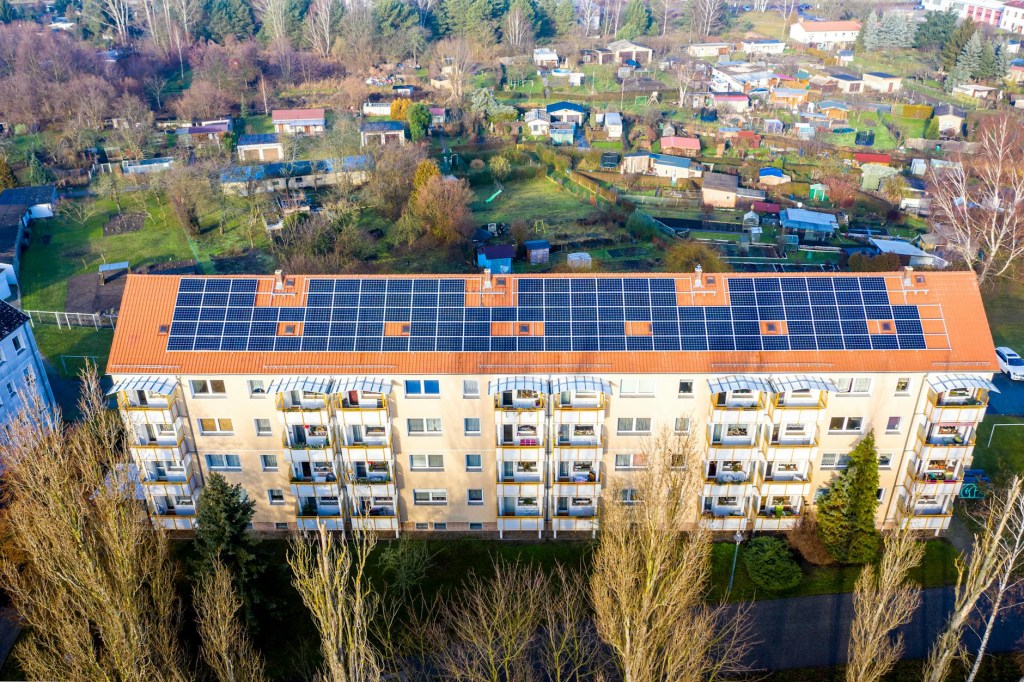
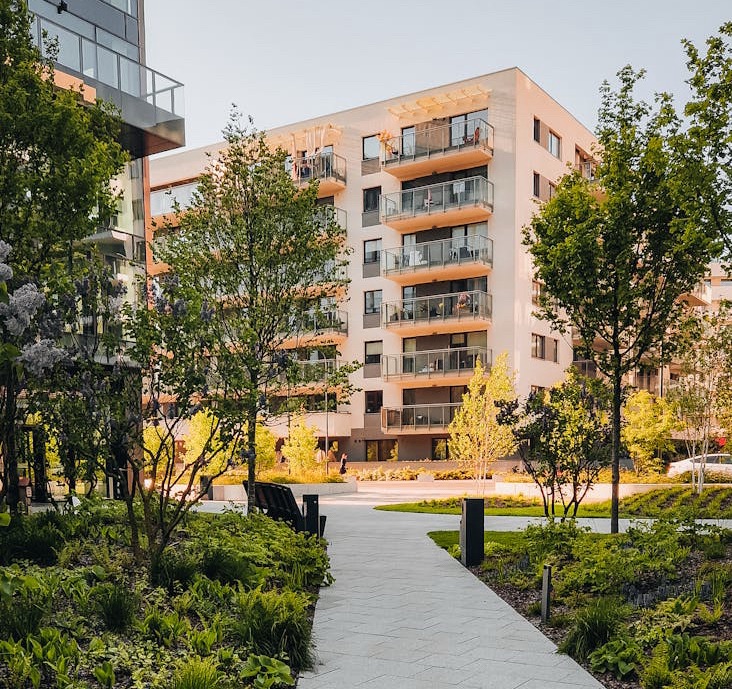
The type of housing we need is mid-rise apartment buildings of tiny home size flats, built on brownfield or derelict sites, in harmony with nature as much as possible; and with sustainability at the heart of every element of the design and build process. And yeah, maybe you can go out into the green belt a little bit when you build in harmony with nature as I say. But that is not what Labour is going for. Quite the opposite.
Perhaps a bit more wild than this, but you get the idea
We need developments to be walkable and with great cycle infrastructure. To have minimal car infrastructure. The narrowest roads we can get away with to carry buses, delivery vehicles, emergency services, taxis when necessary, and so on. No private cars. We need to have all the amenities required nearby. This is obviously very possible when you build with this type of consistent medium-ish density. We need to have rail connections within a reasonable distance. Obviously, when you build in this way, it becomes far easier to achieve this. If you build, as Labour plans to, ugly, expensive suburban sprawl; then rail connectivity becomes incredibly difficult to achieve. Especially when they don’t want to spend any money as a government. Maybe they’ll rip up regulations on that too, and get a US firm to come and build us private rail lines with diesel power in the late 2020s.
This topic is probably the most frustrating of all to communicate in modern Britain. Even more so than the climate crisis itself. Despite what Julia Hartley-Brewer would have you believe, most people get that the climate has warmed and we need to burn less fossil fuels in order to have a future. But when it comes to housing, and building in general, people don’t really put two and two together. I think people have a sense of the population being high. Some are just racist, but not all, and the non-racists have a point. It’s interesting, because the thing we should be worried about is not the thing they’re worried about. They’re talking about public services being stretched, which is really caused by austerity. Some extra immigrants aren’t making a noticeable difference there. The real problem, which they’re not talking about, is in terms of building and general overpopulation causing our already severely nature depleted country to be put under yet more strain, to the point that almost all our wildlife is threatened. We can’t live without wildlife.
The truth that these people will never bring up, is that we’ve obviously built on all of the suitable sites without major issue. For example, I wrote about before a site in this town where they built a development on an actual swamp. It even includes its own pumping station to make sure it doesn’t flood. If places like that already exist, how many suitable sites do you think are left? That aren’t on a floodplain? That aren’t on a swamp? That aren’t on precious remaining green belt land? This is why we have to build density, and very carefully build on the fringes of the green belt. But making sure to tread as lightly as we possibly can. The opposite of what Labour is going to do. They don’t care at all about our remaining precious wildlife habitats. They want endless growth, and they’ll trample anything they have to in order to see that line on the graph go up. They think that’s the key to getting re-elected in 2029, and it’s all that matters as far as they’re concerned.