Tag: Sustainability

  • It’s time to stop asking for Bike Infrastructure

    At COP26, all I’ve heard from cycling people are calls for world leaders and governments to not forget that cycling is essential for any kind of sustainable future plan; whether that be the fantasy one they mean (green growth capitalism), or one that actually works (degrowth, equal society).

    But what they almost always forget is that there’s a reason why the countries that have bad (or no) bike infrastructure are in that predicament. It’s because of the corrupt right wing governments we have, and the society that has been moulded by them and the media over decades. These governments are not going to fundamentally change now, and what change that does come from the system we’re under will be far too slow to make any difference in the grand scheme of the climate crisis.

    Everything society does now has to take into consideration how little time we have to act. For example, no nuclear power, new airports or airport expansion. No new roads, and no new high speed rail in small countries. Anything we can’t do in less than a handful of years should be off the table, with a few exemptions where necessary. This of course includes cycling. We have potentially just a few years left to drastically cut emissions to as close to zero as possible and stop the planet breaching all of the climate tipping points. The only way that is possible is to immediately ban cars and use the roads predominantly as bike lanes. We will need to install some Dutch style infrastructure on certain roads where vans, trucks and buses will remain, but that can be done within a year or two, so it meets the criteria. Swapping every petrol car that exists now for an EV, while also building Dutch style bicycle infrastructure networks covering every busy road in every town and city around the world would do almost nothing to slow down the climate crisis; and it would take far too long anyway. The fact that this is presented as a legitimate solution to reduce emissions at COP26 by the cycling lobby is frankly ridiculous.

    The Glasgow conference is a joke, as I’ve mentioned previously, and anyone who knows anything about the climate crisis will tell you the same. Every day that we refuse to accept the reality that capitalism, economic growth, fossil fuels, and the reign of cars dominating our lives must end, the harder we make it for ourselves. The harsher the cuts have to be. And they’re already incredibly steep as I type this.

    Seeing as I’m watching the T20 World Cup Cricket right now; an analogy would be that we’re batting second and chasing 300 to win. The highest ever first innings score was 278, and the highest ever successful run chase was 245. That kind of puts our challenge in perspective. Everything we do, we have to hit for 6, and we have to do it fast because the runs keep adding on. Imagine if every day another run was added to the target. Technically the maximum score you could achieve if you hit every ball for 6 would be an absurd 720. But considering how unlikely that is, you quickly approach a tipping point after which the chase is mathematically impossible, no matter how many sixes you hit from 120 balls. I’m not going to get into extras like wides. That would be a bit much.

    But just look at what we’re doing at COP26. We’re playing test cricket in a T20 when we’re chasing that record total. We’ve not scored yet and we’re in the 4th over. We’ve almost wasted a quarter of the innings and haven’t even got going. The coach will be losing his mind in the dugout. “Smash it you idiots! Stop blocking and dinking it around!” he’ll yell like a madman. You might say I should shut up about cricket and get back to the point. And that would be fair, but I honestly feel like this could be a good way to explain our crisis to a lot of normal people out there. Use analogies that they can relate to rather than just throwing a bunch of technical climate terminology at them.

    Literally anything is worth a try at this point. Nothing we’ve attempted so far seems to get people to actually understand and care enough to hold the governments and corporations to account.

    To get back to the subject of bike infrastructure, it’s going to be tough for cycling people to hear the counterintuitive message that infrastructure no longer helps us. I mean, many of these people have been saying this for decades now. But if we’re to move forward and get the best outcome for cycling, and humanity as a whole; we have to throw away everything we thought we knew about how societies operate. Once we all do that, we can create a new system from scratch that actually works; and finally bin this terrible one that’s been ruining everything for the last half century or so.
  • The Earthshot Prize shoots for the Moon and misses

    I don’t want to be too critical of the Earthshot Prize; it did do some things right. But at the end of the day, the focus was almost entirely placed on innovation and green growth as our way out of this disastrous situation, rather than the real solution of slashing consumption and shrinking the economy. The parts about restoring nature were generally great; in particular the project to restore coral reefs by engineering corals that can cope with the increasing ocean temperatures. But then you had a project about reversing deforestation in Costa Rica, and it was predicated on the idea that it would attract tourists and lead to economic growth. So they fix one problem in order to exacerbate another one. There was another project in the Masai Mara doing a similar thing; protecting animals by getting wealthy tourists to fly around the world and spend their money on useless knick-knacks.

    I think the undeniably best thing about the series was the name. Earthshot is a great name for the scenario we’re in. It makes perfect sense to compare it to the Moonshot decade, because it’s exactly the scale of ambition we need. The parts of the documentary series talking about the problems are also good, but they got the solutions part almost totally wrong. Yes, we need some technological solutions, but fundamentally, it comes down almost entirely to living smaller and more local with less stuff and with better diets. Neither consumption nor population were mentioned a single time throughout the 5 part series or award ceremony. The fact that not a single youth activist was involved tells you all you need to know. The more I think about it, the more it feels like it was made for sceptical boomers. Perhaps the moon landing nod was even more intentional than I realised.

    Then there’s the prize money itself. Rewarding innovations with a million pounds each over 10 years seems like the wrong approach. Obviously, I believe governments should be in charge of the money and saving our world shouldn’t come down to the generosity of private finance. But, if you’re going to go down this path, at least do it better than this. Firstly, a million pounds is not that much money; and if you really believe in green growth as the solution to the climate crisis, and that these innovations can be key to our survival, then I would imagine you’d throw a lot more money at it than they are. I’m pretty sure there are enough rich people in the world who “care” about the planet to the point where you could raise billions for the prize pot relatively easily. Giving away only a million each goes against the urgent message about rapidly scaling up these businesses to save humanity.

    Ideas like a solar powered ironing trike are nice, but do we really need to iron our clothes at all? It is a nice story that the young girl in question was entrepreneurial but it’s too small to make a difference on a global scale at this late stage. Having said that, it should definitely be put into production. As long as people keep ironing clothes at least. The project that allows farmers to cleanly burn their crops in a machine rather than setting their fields on fire gave me a similar feeling. Why do we need to burn crops at all? I’m pretty sure it’s not necessary.

    There were so many moments I took issue with. They showed the ski slope power station in Copenhagen. But didn’t talk about getting rid of waste in the first place rather than burning it to make energy. They talked about global dimming in terms of reducing rainfall in some areas; but nothing about how dimming has limited warming and getting rid of pollution would actually increase warming. They talked about electric cars and an overall growth of vehicles. No mention of cycling whatsoever other than the ironing trike. There was a segment about tyre and brake pollution from cars and buses. Again, no mention of the key role cycling could play in reducing it. They show Singapore’s touristy green areas but ignore the huge roads and growth based economy. There was no mention of Bhutan’s model of economic stability and protection of nature over profit and GDP. At least they mentioned indoor and vertical farming. That’s something we definitely need to scale up urgently.

    The city of Milan winning the waste free world prize was by far the most bizarre award of the evening. All they’re doing is redistributing food to prevent waste. This is being done in various locations all over the world already. There’s nothing unique there that deserves money. Sanergy (creating fertiliser from human waste with insects) and Wota Box (fountain with filter which allows water to be reused many times) were clearly the better ideas. It’s hard to understand why they were snubbed.

    At the end, Prince William talked about how Earthshot is for young people. Well, it isn’t because young people want an end to capitalism and an end to economic growth. This does neither of those two things and you’ve just ended up patronising them yet again. Just like with climate anxiety, the establishment have proven that they don’t get it. They just can’t get past this failed model of treating the symptoms rather than the cause of our problems. Whether it be anxiety or our climate crisis, the root causes are capitalism and economic growth. Until they accept that, the young will see all of this as insult after insult.

    And the final insult is to give Earthshot 2022 to the kingdom of unrestrained corporate greed, the United States. The country that is going to drop all climate funding from Biden’s “Build Back Better” plan. The only thing remaining is to see how far over 1.5c we are in 12 months time (by the 1750 baseline). Hopefully it doesn’t go ahead because they realise by then that green growth doesn’t work. Probably wishful thinking.

    It will unfortunately happen again next year, but it really is debatable how long it will keep going. Prince William says it will award prizes every year for 10 years; but given how little time we have left to act drastically, what use will a prize be in 2030? Maybe they’ll need to take a page out of Bangladesh’s book and host the ceremony on a ship. Maybe one of the prize winners will be some kind of affordable houseboat. That would make sense by then. There will probably be huge demand.

    As a final aside; as we were watching the episode of Earthshot Prize about clean air, near the end, I heard the neighbour’s petrol lawnmower so I had to rush around closing all the windows. You couldn’t have timed it better. But with any luck, he watched the award show and decided to buy a battery mower to boost our economy.

  • Build Bikes to Quality, not Price

    I’ve written about cheap bikes before several times, but today I want to talk about why it makes no sense to build bikes down to a price which compromises quality.

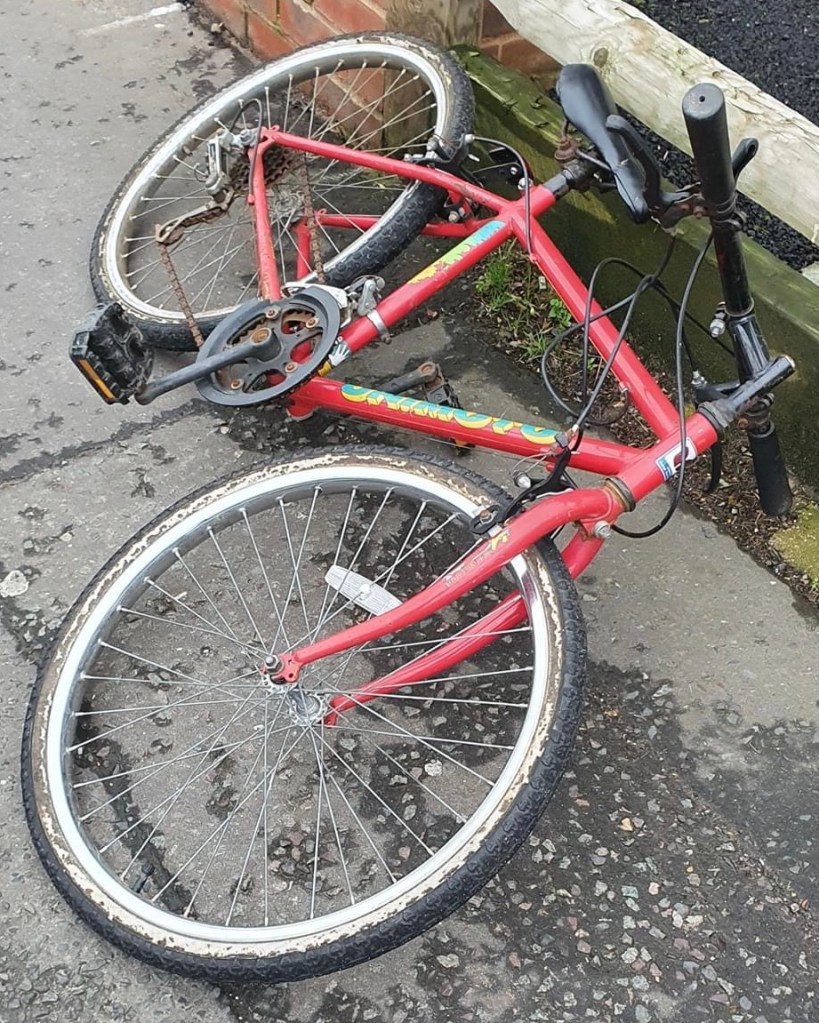
    A rusty old cheap bike in Worthing.

    One of the reasons I love companies such as Riese & Muller is because they build the bikes they themselves want to ride. They use the best components they can find that will create the best bike possible, and whatever that amounts to, that’s the price you pay. That’s not to say you can’t make quality bikes for an affordable amount, but what people consider affordable needs to change.

    For example, my Dutch bike from Batavus cost me about £600. For that amount of money, you get a workhorse of a bike that you can ride every day, and you don’t have to worry about it. Barely any maintenance is required and it’s the perfect short distance commuter for a flat area. You can get bikes that look similar for around half the price, and they come with derailleurs, lower quality metal components that will rust quickly, and things like tyres will be cheaper and more puncture prone.

    You will be a slave to your local bike shop if you buy one of those type of imitation Dutch bikes, and you won’t enjoy your riding as much either. In the grand scheme of things, that extra £300 is not much, and most likely you will save yourself at least that amount because you probably won’t get punctures and you won’t need to replace drivetrain parts. I certainly haven’t done any maintenance on my Batavus in the 2 years I’ve owned it, and I’m not expecting to do much any time soon.

    But beyond just the financial and ownership aspects, simply put, cheap bikes are not sustainable. The bike industry, and society would be so much better off if we increase the minimum cost of a bike significantly. You could still sell single speed bikes for less, because they’re so simple. But other types of bikes should really start at around that £600 mark if we’re going to have a sustainable cycling system.

    It would also be very helpful for shops to have less cheap bikes coming back for parts and service. We have lost a lot of bike shops in the last several years and more quality bikes going out the door will help give these businesses a bit of extra breathing room to cope with the increased demand we need to see. It would also allow time to scale bike retail up to the kind of levels we see in The Netherlands and Denmark.

    Eventually, we’ll get to where the Dutch are now. Average bike sale prices in The Netherlands are about 3 times higher than countries like the UK, and that’s no coincidence. It’s a result of treating bicycles as vehicles. The more respect is shown for cycling, the more money people spend on bikes. That’s the future we want, but we have to start by cutting out the unsustainable junk.

  • I Don’t Feel Like I Identify With Anyone

    Photo by Oleg Magni on Pexels.com

    Recently I’ve felt very alone in my views on the world. When I look at other people who I agree with on certain things, there are other things about them that bother me. Sometimes a lot. One of the only people I can think of who I agree with on pretty much everything is Greta Thunberg. She understands the immediate danger of the climate crisis, and she understands everything that is required to create a sustainable future. She understands social issues, and she understands economic issues including the fallacy of eternal economic growth.

    Perhaps I’m on the autism spectrum as well. It would explain a lot about me and my uncompromising mentality. When she said that hope comes from action, it resonated with me strongly. When I don’t see action I feel deeply depressed and angry with the world. When I see corruption or apathy I despair at what we still are not as a global society.

    I’m not one of those eternal optimists who always see the positives. Sometimes there are no positives. You have to have the ability to acknowledge that and take action to make the situation better. If you’re an optimist perhaps you don’t see the problem at all and therefore don’t take any action. Maybe eternal optimists are a big part of the reason we’re in the middle a climate disaster, and all of these far right wannabe dictators are running so many countries into the ground.

    I’ve had people complain to me about how the country is or how the world is etc. But they told me that they believe whatever will be will be. It’s all fate. I would obviously counter that by saying if that’s what you’re resigned to, then that’s what you’ll get if you don’t engage with democracy. The bad people keep winning. And maybe stop complaining about how much Brexit sucks now too.

    There are so many examples of times where I get frustrated when I’m dealing with people I broadly agree with. On the local Facebook cycling group, people are happy about the council doing next to nothing about cycling, and I come across as really negative, because I know what needs to be done and how fast. People don’t understand where I’m coming from and I just appear to be rude to them.

    I commented on a YouTube video about sustainability talking about electric pick up trucks. It’s a channel I’ve subscribed to for years and really enjoy. I used to love electric cars. But because I’m always challenging myself and changing my mind on things, I’m now anti private car ownership (especially large cars). Most EV fans haven’t had the realization that cycling, Micromobility and autonomy are the future, and so I don’t get a lot of support.

    The thought of how long it will take before everyone does get on the same page is terrifying to consider. Every day we waste is compounding the situation when we’re already facing a rapidly accelerating increase in temperatures, ice loss, sea level rise, extreme weather disasters etc. I spent 5 minutes this evening just looking out the window at the busy road which is basically back to the usual insane traffic level. The noise of every car just pisses me off at this point. I saw one Model 3 and one BMW i3, and even the two EVs I saw out of the hundreds of cars overall still made almost the same amount of noise due to the tyres. And then one girl on a bike rode past on the pavement, and there was no noise at all. One single cyclist. And not even one pedestrian.

    When everywhere you look you see people who think net zero 2050 is a reasonable time frame for action and that we need to replace every single fossil car with an EV, it’s easy to feel like you’re alone. I feel fortunate that there are at least a handful of people out there who truly get it and help me to stay somewhat sane in an utterly mad world. I keep thinking the worst must be over by now, but it keeps surprising me again and again. I just have to pin my hopes on the way back down from the summit of stupidity being immensely faster than the long and arduous climb the last half century has been.

Design a site like this with WordPress.com
Get started