Tag: Sustainability

  • It feels like we’re heading for extinction

    Cryptocurrencies, NFTs, the Metaverse, right wing authoritarian governments, unending talk about GDP growth, and a global population seemingly getting stupider and more unhinged by the day. Even if we can reverse course from here to create a better future; you can’t deny that what we’re seeing right now looks like the demise of the human race.

    It seems like everywhere you look, you’ll struggle to find anyone speaking much common sense about Covid-19, about ending pollution, about making a fair society. It’s a massive shock when you do hear someone speaking logically. I feel like I must follow them on Twitter. There aren’t that many of us now so we have to band together. That’s perhaps overstating it a bit, but it wouldn’t surprise me if that’s how it goes considering the trajectory we’re on.

    The thing I don’t understand is that not only are we not making a dent into the environmental and societal crises we have chosen to get ourselves into, but we’re actively going backwards in almost every respect. Things like NFTs are so bonkers that it’s hard to even comprehend. People pay huge amounts of money to “own” a picture or video of a real item, when those things are both widely available online for everyone. There’s no value whatsoever in these things, and it uses giant quantities of electricity to complete transactions. It makes absolutely no sense.

    And then there’s the Metaverse. It’s basically a VR world where people can meet and have avatars, virtual homes and possessions etc. It’s like Cybertown meets Second Life, PlayStation Home and presumably countless other similar ideas, except with VR headsets and higher resolution virtual homes and furniture.

    It feels like Mark Zuckerberg is reaching his ultimate form. People have always talked about how nefarious he might be or at the very least mocked his awkward nature. But now it really feels like he’s embracing it by going with the Meta brand and Metaverse concept; even if it’ll most likely be about as successful as 3D TV.

    When I think about it, I just imagine the scene in the film Wall-E where the obese people on the space ship are sitting there in VR. Why would anyone want something like that? I can see some good uses for VR, but the particular desire to have a whole separate existence just seems unnecessary and dystopian. We need to stop this madness and just focus on what VR is actually good at. Allowing us to do and experience things that we can’t in real life, not trying to replace real life.

    We have to focus as much as possible on our real world in order to want to save it. Video Games are one thing, which in moderation are great. The Metaverse is something totally different, that I have a hard time believing has anything beneficial to offer society. It’s the type of thing you create when you’re out of ideas for things that really help society. When Facebook started, you could make a pretty good case that it made a positive impact on society. Who can say that now? How many of us still use FB as it was originally intended? To keep up with friends and make communities around common interests? I do, but it mostly seems to be just a breeding ground for far-right views and misinformation. Even though I do use it for a couple of good reasons, I wouldn’t miss it if it was gone, and I doubt many others would either. And that just shows how badly it’s been developed over the years.

    But it’s not just these particular dystopian trends. It’s everything in society that needs to change. We need to immediately stop all of this nonsense and reverse course before we set off all of the cascading feedback loops in the climate system.

    I really don’t know how, but all these products and concepts have to end, and soon. We have to start thinking about what really matters to us. Is it the ridiculous gadgets and gimmicky services? The endless pursuit of economic growth when we all feel miserable? Or is it the wonder of nature, the simple pleasure of a bike ride, relaxing and enjoying the slow life? If we’re going to avoid extinction, it’s crucial that we stop this trend of doing the worst possible things at the worst possible time. We need to wake up fast and reassess everything we’re doing, because the vast majority of it is the opposite of what we should be doing.
  • What are you NOT doing to fight the Climate Crisis?

    Just do less

    What are you doing to fight the climate crisis? That question drives me nuts. Are you driving an EV? Are you buying sustainably manufactured products? Are you powering your five bedroom detached house with renewable energy? These are the questions you hear all the time.

    What you never hear is “what are you doing less of?” Are you switching from working full time to just a couple of days a week? Are you buying less clothes, less shoes, less tech, less stuff? The focus almost always seems to be on “sustainable consumption”, which is basically an oxymoron. Yes, we need to consume certain things to survive, but that’s not what people mean when they say that. It’s about continuing to over-consume things we don’t need, but in a slightly less bad way than before. That’s not going to do anything to stop our climate predicament getting out of control.

    We’ve been hearing recently about 4 day work weeks and UBIs. I’m certainly in favour of both of these policies, but while they promise positive things for quality of life, mental health and reducing poverty; they don’t really do anything about our rampant over-consumption. A 4 day work week with the same pay as now would reduce emissions from commuting, but presumably it would lead to an increase in leisure consumption and long weekend travel.

    As far as a UBI, I think that concept is something that would have been great if it was implemented decades ago. Now, it feels like far too little, too late. It’s not about providing people with a great, simple, high quality of life. It is intended to allow people to actually get by when they’re unemployed. It’s basically a decent level of unemployment benefit similar to what you can get in numerous countries now.

    I think what we need now is more like a full universal income that can provide people with everything they need to live a healthy and sustainable life, rather than an unemployment safety net. And I think that should be the way everyone lives. The only people who will work in this scenario would be people who make a real positive difference to society, and they wouldn’t be doing it for money. We would all live in a broadly similar way, with different hobbies, interests, opinions and so on to differentiate us. We could get rid of currency entirely. I’ve talked about that before.

    The general point I’m trying to make is that it’s the big things that we don’t talk about reducing or eliminating. To be fair, we do hear people talking about eating less meat and dairy or flying less, or even eliminating those things entirely (very rare when it comes to flying). But when do you ever hear people talk about how we need to have less kids to reduce the population, or live in the smallest homes we can? I don’t hear it. Sometimes you see people talk about the insane emissions of the richest 1%, and how we need to tax them 99%; and that’s true. But people never talk about how not only do they need to live like the rest of us; but that we all need to live much smaller and simpler lives than almost any of us do currently.

    Many people get frustrated when activists like Greta, scientists like Paul Beckwith, or nobodies like me tell them how bad our situation is. They want to know what they can do. Well, here you go: just do less. While it’s true that certain elements of sustainability require you to do something differently, like ride a bike or use reusable containers, fundamentally it always comes back to living simpler, smaller, and more local lives. All of the things we need to do differently come naturally once you’ve made that decision to just do less.

    It’s really that simple. The media, politicians and neoliberal economists want to make it sound so complicated, but the truth is that it couldn’t be simpler. Just do less.

  • We don’t drive at 200mph, so why do we need HS2?

    Cool looking trains, but they’d still be cool running at 125mph on current lines

    The reason why Shinkansen trains are accepted in Japan is because they were built at a time when everyone bought into the fast life idea. Practically no one questioned it. The economic benefits, GDP and all of that. Those things that a rapidly increasing contingent of us now know to be unnecessary, and are actually killing us.

    It was at a time when we didn’t have connectivity like we do now. How would you justify high speed rail now when you could take a limited express or a sleeper service and work on the way with wi-fi or 5G? The answer is, you don’t talk about it, or you make up some bullshit about it taking strain off the existing network. Well, I’m no railway engineer, but I imagine that building more standard lines in our current railway system would also do that for an infinitely lower cost. Both environmentally and financially.

    Who says “it would help the economy if I could drive my car to Manchester at 200mph”. Not even Jeremy Clarkson would say something so ridiculous. Well, I don’t think he has anyway. And who would want to take a coach at 200mph? I definitely don’t. There are enough coach crashes around the world as it is, and I can’t imagine it would be a fun ride, if such an insane bus actually existed outside the realm of video games.

    So, we don’t need HS2 because the speed benefit makes no sense if it’s not applied elsewhere (not that it makes much difference to journey times anyway); and because of the connectivity and remote working we now enjoy. But what about the environmental impact? We know that the UK is one of the most nature depleted countries in the world, and we also know that the route of HS2 just happens to trample on 32 ancient woodlands directly, and another 29 indirectly. And considering the fragility of these precious ecosystems, it’s unlikely that those 29 will survive at all.

    We can’t lose this. Photo credit: waronwildlife.co.uk

    If HS2 was necessary, which it isn’t; the obvious question would be why didn’t they build alongside existing motorways where there is often a lot of space and certainly great grid connections? Is it because nature is effectively worthless under this economic system and therefore an easy target? Is it because the rich business travellers who would be frequenting this service would like a nicer view out of the windows than a motorway? Is it because our leaders don’t care about nature at all and sadistically would enjoy trampling on it? My guess it’s a bit of all three.

    And then there’s the climate implications of all of this. We know that in order to give ourselves a chance of survival in the face of the climate catastrophe, we have to slash consumption by as much as possible, and we have to live slower and smaller lives. We will travel less, and when we do, we will go slower and on the ground unless absolutely essential (visiting family overseas for example, not for business travel). We’re already seeing a resurgence of sleeper trains across Europe, and we need to see it here too. We do have a couple of services domestically, but we need to see more; and we desperately need sleepers that use the channel tunnel and serve the major European cities.

    But obviously the climate implications of HS2 don’t end there. There is the immense amount of emissions generated during the building of the railway in the first place; but time is also a huge aspect. Because we only have a handful of years at the most to slash our emissions to as close to zero as possible; we can no longer take on decade long mega projects like this (or Hinckley Point C for example). There will be the odd exception, such as a massive upgrade to our existing railway infrastructure that can’t be completed in just a few years. But generally speaking, we have to think as short term as possible. This sounds counterintuitive since we’ve always been taught growing up to think about our long term future. Unless you’re in business in which case short term profit over long term stability has been the name of the game. But as long as the Earth’s climate is in the disastrous state it is, we have to think day by day with a single-minded focus on how to slash our consumption, and therefore our emissions as much as possible. Very little else matters. The byproduct of which will be providing a better, cleaner, fairer world to everyone, and allowing ourselves a chance at a future. In addition, we will be protecting and restoring our natural areas and our precious wildlife. It’s easy to do. It simply requires doing nothing.

    Just like with Covid, we solve the world’s biggest crises by just slowing down and stopping. Lounging around and being lazy can stop runaway climate change? If you’re anything like me, that’ll sound pretty appealing.

  • Bike Parking needs to change fast

    In my last post, I wrote about how comprehensive bicycle infrastructure networks, for the most part, are no longer necessary at this late stage of our climate crisis. But bike parking is a totally different story. We desperately need quality bike parking facilities.

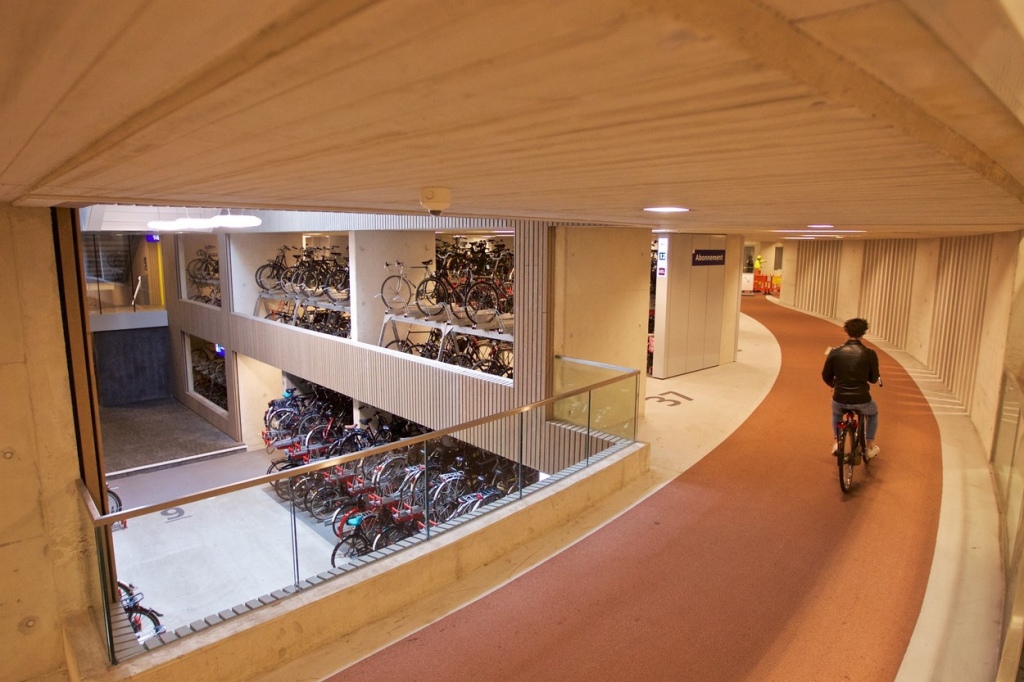
    The Dutch understand this and are investing massively, and have been for years. Which is why a new, state of the art facility that accommodates tens of thousands of bikes is opening seemingly every week. They understand that secure parking is almost (if not equally) important in getting people cycling as providing the safe routes themselves.

    I don’t know if the Dutch are rolling these bike parks out at the immense clip that they are because they know how critically short we are on time to prevent climate tipping points; but they certainly are acting as if they do. As I mentioned previously, almost everything we do now as a world society to tackle the climate crisis has to be possible within a few years. That’s why we should ban cars now instead of copying the bike network of the Dutch. But there is no other option when it comes to parking. You have to design and build these facilities, which takes years of design, planning and construction. At the rate Britain is going, we might have one of these facilities, on the scale of the world’s biggest in Utrecht, open in 2026. And I’m far from convinced that it will actually happen. We have to move fast and put the money into this immediately. If we focus on bike parking as our transport priority, we could potentially have them in every major town and city by 2024 or 2025.

    In order to achieve something like this, you would need to completely flip the transport budget upside down. The government has their £27.5 Billion road building program, but cycling is only getting a less-than-pathetic 1% of that amount. Any government serious about having a future on this planet would immediately swap those around, but of course almost no governments would do that. But let’s just pretend they would and imagine a better world for a minute.

    You might be wondering in this hypothetical scenario what we do between now and 2025 when all of these bike parks are up and running. Do we all just not ride bikes in the meantime through fear of getting our pride and joy stolen? Obviously, we can’t afford to wait, and we need to limit theft as much as possible. The data for June this year showed a 50% spike in theft compared to the same month in 2020, near the end of the first wave of covid. Utility trips (and therefore bikes locked up) dipped by 20% in 2020, and even though it will have picked back up in the second quarter of this year, it wouldn’t have accounted for that huge uptick in thefts. It seems more likely that the demand for bikes and the manufacturing shortage has lead thieves to up their game in terms of organisation and “professionalism”. With highly skilled thieves taking advantage of the lack of secure parking, authorities have to move while we wait for the Utrecht style bike parks to come to fruition.

    Smaller scale secure parking can be introduced quickly in residential and commercial urban streets, for example. And it’s also possible for existing buildings to introduce new or improve existing bike parking facilities for staff or customers. We’ve seen train stations introduce swipe card entry and CCTV to existing bike storage rooms for example. And I think folding bikes are going to play a big role in urban areas. They are always a great idea, and with the lack of secure parking, they’re essential to the growth of cycling in the next several years especially.

    Cargo bikes are going to be increasingly huge in terms of the transport mix as we go forward, and they will also present a security challenge. However, their sheer size and weight will help deter thieves, and the most recent models often come with immobiliser type functions where they won’t roll unless they’ve been unlocked by the owner. I also think commercial cargo bikes won’t be effected due to them being either in constant use, or stored at the business premises. Cargo bikes for individuals and families will be more of a challenge in the short term; but as mentioned above, they are much less appealing to thieves than regular bikes. And let’s not forget, you can (and should) insure them like you would insure a car, except it’s a lot less expensive. Even if the worst was to happen, you could just get another one, and it would still be far cheaper than owning and running a car.

    Bike hoops outside SpashPoint Leisure Centre in Worthing

    But what we really need to get away from is shit bike parking. Don’t get me wrong; bike hoops are clearly the least bad of the options, but they’re not great; especially when they’re uncovered. Front or rear wheel racks are basically useless and they are not designed for all of the different tyre widths you see. No new (or relatively recent) development should have uncovered racks of any sort. SplashPoint Leisure Centre (pictured above) is the most egregious example where I live. They installed quite a few hoops, to their credit. But could you really not afford to at the very least cover them up?

    When I was in Cambridge a couple of years ago, I visited a new station north of the city. It had hundreds of bike loops, and they were covered by a large roof, to at least keep the rain off. At that time, I remember being astounded that they would do anything that cycling friendly at a medium sized train station in the UK. That’s what living in West Sussex does to your expectations. But from now on, I think it is the absolute bare minimum we should expect to see at transport hubs.

    And then there’s the other local destinations. Convenience stores, doctors surgeries, dentists, libraries etc. So many of these places have rusty old bike racks that hold maybe 4 or 5 bikes if you’re lucky, but they also have a car park for 20 or 30 cars. If we somehow did wake up from our climate slumber tomorrow and decide to ban cars, you’d have all sorts of problems with bike parking at these locations, 1 or 2 miles from home.

    We clearly need a two pronged approach to this critical problem. Small, covered, sometimes secure parking in residential areas and local amenities, and massive investment in Utrecht style parking for tens of thousands of bikes in urban centres. We can’t wait any longer for this change. Cycling rates will stay relatively stagnant until something happens to show people that cycling really is respected as a form of transport, like it is elsewhere.

Design a site like this with WordPress.com
Get started