As with my previous articles in this series; this one will seem very shocking if you’re used to consuming British mainstream news coverage. All you tend to see in the establishment discourse are calls for yet more military spending (where the follow up question is never “how will you pay for it?”) Along with that, you just get warmongering about Russia, and fearmongering about China and Iran.
Military spending and outdated weapons
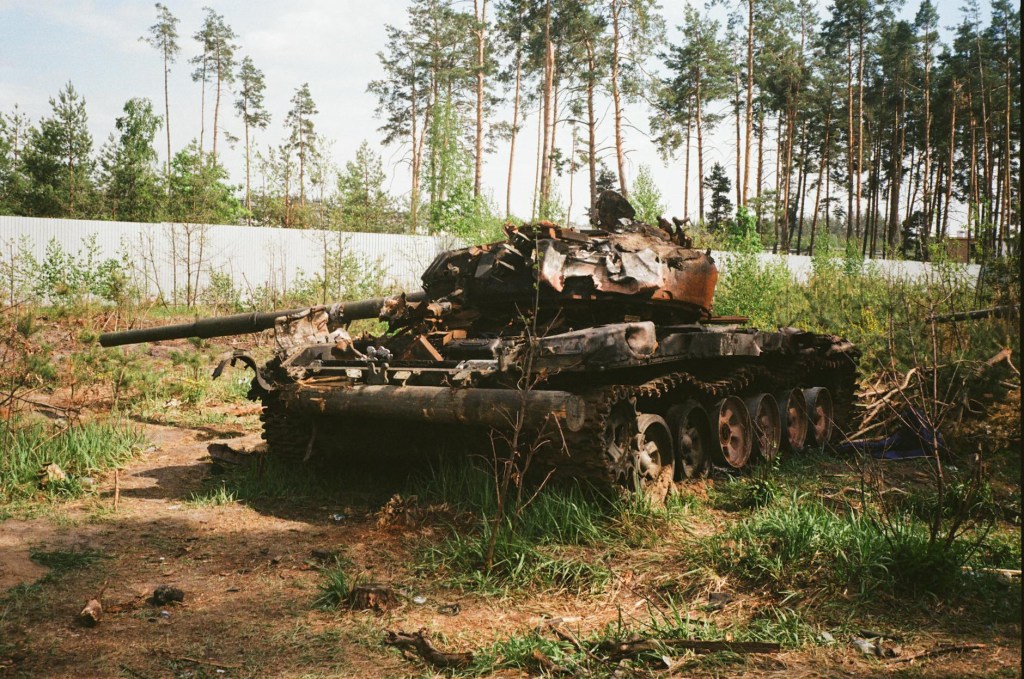
If I was writing our military strategy right now, the first thing I’d do would be to immediately slash the military budget by more than half. The latest target the Labour government have set is for 3% of GDP. Initially due by the end of the next parliament, but it seems that they now want to pull this forward by a handful of years. The current amount is something between 2.3% and 2.5%. I would cut that to around 1% of GDP to start with, and switch focus to be on defensive weapons rather than offensive. There’s no reason to have jet fighters, aircraft carriers or tanks in the present day, when we have such advanced automated weapons such as drones and ballistic missiles. It would presumably be extremely easy to destroy an aircraft carrier or a tank these days, so to me they come across as toys, for lack of a better term. I think it’s very clear that in 2026, the types of weapons bought by militaries is led by nostalgia as much as it is by the bloodlust of warmongering (overwhelmingly male) leaders.
There’s very limited reason to have ground troops either, outside of perhaps special operatives like the SAS. Yes, it’s fun to run around shooting people in online FPS video games. But in real life, you’d logically just send in a drone, fire a guided missile, or use a sort of defensive missile system that automatically intercepts incoming fire. We can redeploy the vast majority of ground troops to do infinitely more useful jobs that aren’t going to leave them suffering with PTSD. Very much the opposite. Building renewable energy, EV buses and associated charging infrastructure. Maybe simply building homes. The types of people who end up as ground troops in the military are likely to be very capable of being trained as builders, mechanics or engineers for example. There are a lot of things they could be doing that would clearly benefit the country over what they’re doing now.
I would extend this to all troops including those stationed in overseas military bases. I would close all of the overseas bases entirely. Our military should have no presence outside of the UK. Same with the US and every other nation. Unless you wanted to go down the route of having a continental army or global alliance, which I’m not opposed to. Perhaps that would be a good way to reduce costs in the next few years even further than what I’m envisioning. It could be a decent compromise between fully getting rid of the militaries, and continuing as we are now, for people who don’t feel comfortable (yet) with my kind of strategy. But I think doing it in a continental organisation would be difficult if you have strongly differing politics within the allied countries. It would make more sense to organise it based on ideology.
Nuclear Weapons must go
I would retire nuclear weapons. Our current nuclear submarines don’t work, and we require the USA’s permission to fire their nuclear warheads. Not that we should keep nuclear weapons even if they did work and we fully controlled them. But the current situation is particularly absurd.
People will say that getting rid of our nuclear deterrent leaves us exposed. At the end of the day, any kind of nuclear war means the end of humanity as we know it anyway. And we wouldn’t be any more exposed than we are currently, even if the world wasn’t going to end in the process. In fact, we are about as exposed as it’s possible to be. To reiterate; we rely on a fascist dictatorship currently threatening to invade (or has already invaded) various countries, to use our broken nuclear weapons. We’re also not a part of the EU, so we’re not going to be a high priority for them to defend if it came to that. Anyone who is actually serious about national security should be talking about rejoining. And NATO is under threat due to Trump’s threats over Greenland too. I agree with Zack Polanski about NATO. In the current paradigm, I would look to replace it with a European or World alliance with countries who aren’t fascist. I think that’s only likely to be sufficient for a few years; so I wouldn’t seek to go in that direction personally. I’d want a global alliance specifically for true world peace and disarmament. But it would be preferable to the current situation at least.
Emissions of war
Militaries are never going to be sustainable. Just the idea of war powered by green energy is laughable. Destroying things in a sustainable way can never happen. This is a big reason why military emissions have never been included in national emission reduction targets, or talked about at the useless UN COPs. It is estimated that 5.5% of overall global emissions are attributable to militaries. But this crucially doesn’t include the emissions of warfare itself, or the emissions involved in clearing up the destruction and rebuilding. Nor does it include the long-term health implications of the lingering toxic chemicals remaining in the environment. Human and animal lives are just collateral damage.
I think it’s safe to assume based on the data I was able to find that we’re probably looking at closer to 10% or more of global emissions. That’s a lot. And we can cut it.
The warmongering neoliberal leaders we’ve been stuck with for decades knew that militaries will always be inherently polluting, and they didn’t care to do anything about it. We need a world where we focus only on looking after people and things, and stop putting so much energy into poisoning and destroying them.
Pacifism is necessary
In the end, a world in which militaries exist at all is a scenario where genuine climate action is practically impossible. When governments are spending significant percentages of GDP on deadly weapons, and they’re boasting about how that’s good for growth; while healthcare, education, housing and transport are all severely underfunded and struggling; where utilities are privatised, failing, and unaffordable; you know you’re dealing with a society with its priorities backwards. And I didn’t even mention climate action there. The sentence was already far too long. And it more importantly reflects the reality that the preservation of our world is practically always the last thing people think about.
Pacifism is necessary in my view. Can you imagine a world in which we actually take the climate crisis seriously, and all countries genuinely work together, while we still have militaries? I can’t.
Maybe you do think we can have militaries and deal with the climate in a serious way. Maybe you think that the issue is the size of the militaries. With smaller militaries, and a more friendly overall global perspective and desire for co-operation, we’ll be able to do it. Perhaps you’re right. I just think history suggests we would have done so by now if that was going to be the case.
Feminism’s role
There’s clearly a gendered element to this. We still live in a man’s world; and you don’t get equal and happy societies, world peace, or climate action without gender equality first. It’s the root of everything going wrong. Obviously, there are exceptions; but I would say in general that women are most often involved in nurturing and building things, and men are almost always the ones involved in destroying them.
I think this tendency is visible in politics too, where in recent UK polling, we see the far-right Reform UK polling higher among men, and the left wing / centre-left Green Party polling higher among women. I’m sure you can see where I’m going with this. Degrowth communism and feminism are inseparable. We need a more compassionate, intelligent society in which we prioritise all the things neoliberalism has left to rot, while dismantling the one thing they care about building up; the armed forces.
Things are already bad enough under the supposedly centrist Labour government; and the fascism of a potential Reform replacement will dramatically exascerbate the existing damage to our precious public services. More people on the left need to be willing to stand up and say the kinds of things I’ve outlined in this article; no matter how insane it makes us look in our extremely disingenuous, reactionary media. It doesn’t matter if they laugh, as long as the idea of pacifism is planted in their minds.
I don’t necessarily think the Greens have to go as far as I’m going. I think you need a more extreme flank and a more mainstream friendly party like the Greens are right now. Roger Hallam is definitely right about that. But I do think Zack and co need to seriously challenge the bloated military budget as a starting point.
There is a real threat of fascism materialising; with their toxic politics being amplified daily by a media that is clearly biased towards misinformation, hate, pollution, destruction and division. We can’t let the bullshit warmongering narrative go unchallenged, and we have to offer a totally different perspective. Let as many people as possible know that things don’t have to be this way. The military doesn’t have to keep growing. It can shrink and change. Or it can disappear entirely if we want.
Similarly to how Labour are more scared of the Greens than Reform; they’re also more scared of peace than they are of war. Think about that.