Tag: Degrowth

  • The Future of Tech in the Climate Crisis

    Why battery life matters

    This is going to be the screen tech of the future in everything.

    I talked in my last post about the end of tech capitalism, and its search for ever more power and graphical capability. Now I want to talk about my vision for tech, and especially consumer (hate that word) devices in a degrowth communist society. Power and graphics are clearly going to be less important, if not entirely irrelevant. Energy efficiency, battery life and the ability to function in times of crisis when disruption of power grids is common will be crucial. The ability to live off-grid, even just for a few days with a few solar panels, small wind turbines and battery backups will be important around the world. Even in rich countries.

    Devices with adequate or poor battery life when they are first manufactured become useless as they age. Especially in an era where we will increasing covet longevity and reliability. E Ink devices (like e-readers) and DSLR cameras, are great examples of tech being entirely usable even after many years of battery degradation. An original Kindle probably still works like new, and I know personally that a 14 year old DSLR keeps going no problem. You also see this in the youth trend for buying and using old digital cameras. We need to focus on this type of tech. Stuff that’s really useful, built to last decades, repairable, and ultimately recyclable.

    Even EVs fall into this category. Things like electric buses could be refurbished and kept in service for many years. You could also imagine EV buses or coaches being used as emergency shelters during extreme weather emergencies. Their huge batteries being able to power the basics for a number of people for multiple days. They could also be used to power buildings, like we’ve seen with vehicle to grid technology in cars. Especially in Japan where they see it as vitally important during potential earthquakes and similar events.

    Going back to consumer devices, I think we will see an increase in the use of E Ink screens in phones and tablets over the typical LCD and OLED models we’re all used to. They’re already being deployed in some advertising situations where screen refresh rate is irrelevant, and it allows a huge reduction in energy use.

    E-paper screens, as they’re known, only refresh when something changes on the screen. So, if you’re reading a book, it only refreshes when you turn the page. This is in stark contrast to traditional screens which refresh 60 or more times a second. You just don’t notice it. This is massive for battery life as you can imagine. It’s why your Kindle or other E-reader lasts for months in standby mode, and weeks even if you use them often. It would make so much sense for battery life, longevity of the devices, reducing overall energy consumption, and for potential emergency situations for many of us to switch over. Not to mention reducing strain on our eyes. Perhaps not for video and fast moving games, but the technology is continually improving. We already have various impressive colour screen options, and I can imagine refresh rates fast enough to watch videos smoothly coming along in the next several years. Perhaps we’ll see TVs and large video screens using E-paper.

    Even in the somewhat unlikely event that they don’t improve, I occasionally find the thought of replacing my phone with a black and white E Ink model with a slowly refreshing screen very tempting. Part of me would very much like to switch off from the nonsense you see every day on social media. Especially the climate denial and far-right bullshit. But also any other stupid and unnecessary arguments and hate from people; who are clearly mentally unwell and are taking their stress and anxiety out on others. Many of whom probably have similar afflictions themselves. The further we go into our future of climate chaos, the more tempting it will be to escape from social media. Or at the very least be incentivised to use it less because of the less than ideal screen for Instagram, TikTok etc.

    There are so many other areas of technology where we can simplify, focus on reducing energy use, use better materials (anything other than plastic) and so on. We need to investigate as many possibilities as we can as soon as possible. It’s quite an exciting prospect, because for so long the emphasis of technological and design improvement has been the opposite of the new philosophy we need. When we actually try to do things better; logically, you’d assume that there’s a lot of low hanging fruit in terms of avenues for innovation that haven’t been tapped into at all yet.

    I’m not saying it’s going to save this current disastrous economic system and global civilisation as we know it from collapse. But as we try to mitigate and adapt as best we can to the climate chaos that’s already here and on the way, these principles will definitely help. Even if we ultimately fail in creating a new system that works with nature. It’s better to do things right at some point than never. I’d rather we go extinct, if that’s what happens, having first tried everything we can to live in a far better way. And failing us doing it together as one humanity, I’ll just get that phone and ignore all the idiots fighting amongst themselves over pointless shit.

  • Does Cycling have a future in the UK?

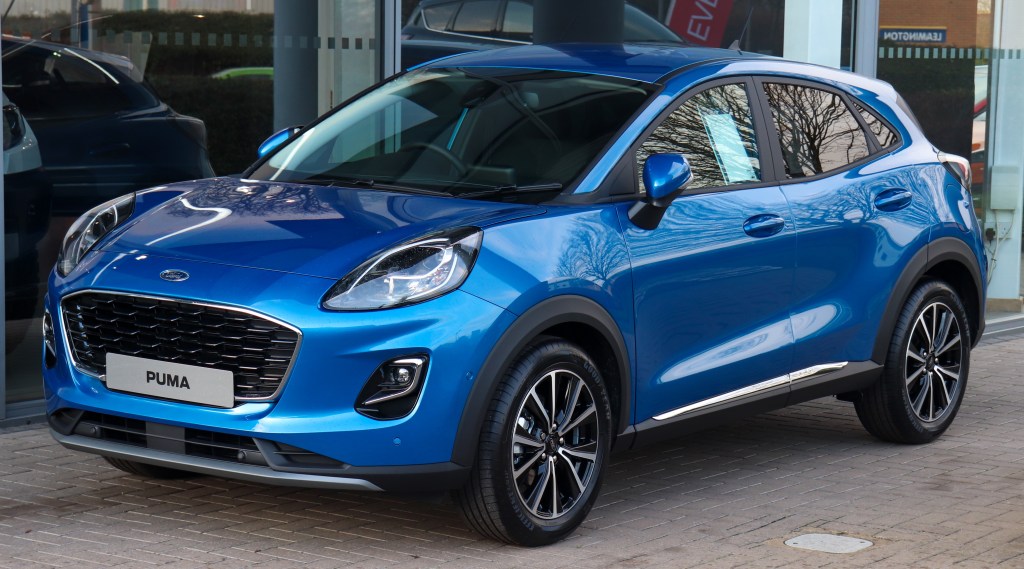
    Considering that the already paltry cycling and walking budget just got slashed by two thirds; you might expect me to throw my hands up in exasperation and head on down to the nearest SUV dealership (that’s pretty much what they are these days) and place an order for a trendy Ford Puma or equivalent from any other brand.

    Shockingly though, I’m not going to do that. Our future isn’t to give up and fit in. And here’s why.

    Thankfully, this isn’t our future. Photo: Vauxford

    This latest budget cut and effective middle finger to cycling for transport in the UK just reaffirms my strongly held belief that we need to ban private cars and use the roads as bike lanes in the very near future (as in now). I already felt that time was too short with respect to the climate crisis, and that half-decent infrastructure change, built over decades, would be grossly insufficient to make any real impact. But now, not only do we know that slow, incremental change will be completely ineffectual in any relevant timescale; but we also know unequivocally that there will not be any significant infrastructure change at all, even in the medium term. The dream the eternal optimists in my local cycling group had of ubiquitous, Dutch style infrastructure is completely, utterly dead.

    Having said that, it probably still won’t be enough to deter these people, which is partly why I decided to stop involving myself in the local advocacy. Metaphorically banging my head against a brick wall in those meetings and Facebook groups was growing a bit tiresome, to say the least. So, I guess they can continue lobbying the town council that has no money and no power to do anything about the roads anyway; and the county council, that is openly trolling us about cycling, and one of the handful of counties across the UK rated as 0 out of 5 by Active Travel England. Not that they have much funding to give out after this first tranche anyway. I hope they wake up, but I’m not so sure they will.

    Either way, I think I’ll stick with offering ideas that might actually lead to achieving something in short order, rather than next century.

    We’re never going to get infrastructure. We need to empty the streets of cars.

    So I suppose you could almost call these cuts a good thing? That may be going a bit far. We do need some infrastructure to separate bikes from the vehicles that do remain after we ban private cars. There will still be buses, coaches, trucks and some vans (although no doubt many of them will be replaced with cargo bikes). But the good news is that this kind of infrastructure wouldn’t be hard to add later on. With so few vehicles on the roads, and buses not getting stuck in traffic, there would be no road rage and bikes and bigger vehicles would be perfectly able to share the mostly empty space.

    The other type of infrastructure – my favourite kind, the LTN, or Low Traffic Neighbourhood, is so cheap, quick and easy that it almost doesn’t need to be mentioned. But just as a quick refresher, you put some bollards at the ends of a road to stop through traffic, and that’s it. It’s so simple, even a Tory could understand it. I don’t think they want to, but still.

    Speaking of Tories, I’ve been thinking recently about the Highway Code changes, where vulnerable road users have been given priority at junctions and so on. It changed over a year ago now, but I still see Highway Code trending on Twitter almost every day. I know the rules changed before Boris Johnson got booted out of office, so on first glance it wouldn’t appear that a pro-cycling PM would want to stoke increased tension on the roads by changing the Highway Code rules and then not publicising it very well. But it’s not as if Boris Johnson was ever that supportive of quality infrastructure. Like most Tories, he told people to cycle, without actually providing any infrastructure to do so. Other than the public hire bikes (operated by private company Serco of course). And he didn’t even implement that. It’s commonly known that Ken Livingstone, the London Mayor before him, green-lit the project.

    When you consider this, it does seem more plausible that the Tories could have been planning all along to turn cycling into a big culture war topic at the next election. Seeing what Sunak and his cabinet are willing to do in terms of demonising asylum seekers, underfunding the NHS, disrespecting and underpaying striking workers while refusing to come to the negotiating table with serious offers; going after “woke cyclists” seems like an obvious next step. The Highway Code change may have been a happy coincidence for them, but it’s irrelevant. What matters is it sets them up perfectly.

    So what can we do? I guess the first thing would be to just stop thinking about Dutch style infrastructure projects. As I’ve mentioned above, some people are a bit beyond help in this regard; but those of us in the real world need to focus fully on three aspects. Banning cars, bike parking, and LTNs, as previously mentioned. These are all things that can be and are being delivered to varying degrees by progressive councils (or even moderate councils) for very little cost. Banning cars is the most difficult to achieve in total, but we do see some towns and cities banning cars from historic centres, or introducing low emission zones, which I think are over complicated and not worth doing personally. I’ll talk more about banning cars later. As far as parking and LTNs, town councils can’t build bike paths, but they can get rid of car parks and replace them with bike parks. That’s certainly the biggest tool available in a situation like here in Worthing, where the town council is pro-cycling and the county council is about as oppositional to cycling as it’s possible to be. In other places where the councils in charge of roads are more amenable to our demands, LTNs can be introduced rapidly and make a huge difference in making areas feel safe and welcoming for people not in cars. They can start with temporary schemes to test how they would work before being made permanent, which is incredibly useful. If your local council has the power to remove street parking, then that can also be a quick way of making progress by replacing spaces with Bike Hangars for example. There’s also the potential for town councils to turn vacant town centre shops into indoor bike parking. So there definitely are ways you can push your council, even if they don’t have control over roads or bike lanes.

    We can achieve a lot through those three avenues, but to ban private cars entirely, you need central government to play ball; and that is where you encounter that familiar problem which tends to come up when you want to do anything good in society. It’s Capitalism, and the urgent need to dispense with it in favour of Degrowth Communism. This is partly why I haven’t been posting as much recently. Every time I come up with an idea for a problem that needs fixing, ultimately it always comes back to the economic system. The ultimate solution is always the same, whether it be cycling, public transport, inequality, healthcare etc.

    However, we do at least know what is officially no longer on the table, and that is a very helpful thing in my view. With this government (and probably the next one too), we’re only going to get some tarmac shared pavements and some paint. Once we all (or most of us) accept that, I think we can become a lot more effective in terms of potential protests and making a real impact. I’m thinking along the lines of the Just Stop Oil slow marching protests, but on bikes. I can definitely see that kind of thing being the result of the anger and desperation people who want a cycling future are feeling at the moment. It’ll be interesting to see if it happens before or after the government officially start their anti-cycling culture war push. But either way, I think it’s inevitable at this point.

    When you look at the EU pushing for e-bikes and cargo bikes, with the uptake being so strong in those countries; the damage Brexit has done to cycling imports and exports; and you see us going backwards from a position most people didn’t think we could go backwards from; you can clearly see how untenable this situation is. It can’t be allowed to go on any longer. It’s time for very targeted campaigns and mass protest.

  • Covid Restrictions haven’t worked. Only System Change can

    Last year I wrote that Covid won’t end unless we act on the climate and end capitalism. That prediction has proven to be pretty accurate unfortunately. The problem we’ve seen more and more is that people get tired of the restrictions and measures. Maybe most people will take the vaccines, but many wont. You could get around that if people were all willing to keep wearing FFP2 masks, distancing, working remotely and so on. But in almost every society, we see that people eventually get frustrated and give up fighting the virus. And governments inevitably decide that economic growth is more important than lives and long covid misery. And this whole process is expedited when the restrictions are half-hearted and ineffective, which you see more in countries with the furthest right wing leaders.

    Take Australia or Japan for example. They did such a good job for so long in keeping cases and deaths low, but eventually many of the good people who always followed the rules to look after everyone else as well as themselves got fed up and gave up. And the cases skyrocketed. Of course it’s going to happen when normality as we’ve known it is the target, and you slip back after making slow progress for months. Why would you keep going when the illusion of normality is within touching distance? Unless you obsessively follow the latest terrifying science as a tiny minority of people like me do, you wouldn’t.

    When the virus of stupidity has taken control of the world, the majority of people are incapable of thinking “let’s go for one last push with tough restrictions so we can come out the other side of this pandemic”. Instead they think “fuck these restrictions, I want to live!”; even though a rational person would realise that’s a counterproductive strategy after thinking about it for any significant length of time.

    So with that said, clearly we have to stop making the end goal to return to how things were in 2019. We’re effectively trying to make a fad diet work rather than making a permanent lifestyle change that we can maintain. It’s not just about ending capitalism and economic growth, but that’s certainly a great starting point. If we change the way society works to a degrowth style model, we can eliminate covid without any restrictions as we know them. We wouldn’t be trying to return to a previous time. We’d be moving forward with a better system for humans and all other life on Earth.

    That just leaves the problem of trying to convince people that a degrowth economy is in their best interests, and that’s where selfishness and individualism come into play. The rich will presumably not want to give up their luxuries; but really, that’s our only choice now. We’re not going to return to how things were pre-pandemic by vaccines and restrictions. It’s going to either be continued chaos, new variants, endless boosters, and prioritising growth over lives or long covid misery for millions; or a new system that benefits all of us and gives us some chance of a future on this planet as an added bonus.

    Degrowth may not be enough to stop human extinction. Certainly Prof. Guy McPherson doesn’t think so (barring the rapid deployment of the MEER mirror system for reflecting heat away from the planet). But it’s the only economic system which at least gives us some chance. Continuing with our current insanity as usual model is not an option. But regardless of what happens with the climate, I’d like to experience a covid-free, fair, friendly and logical society before the apocalypse comes, if it comes.

Design a site like this with WordPress.com
Get started