I feel like I’ve waited forever to get rid of my car and get out of my finance deal a year early. I decided I wanted to go car free about a year ago and have been counting down the months ever since. And on Tuesday it finally happened.
As you might expect with the car industry, there were a few final hurdles to jump through though. The collection agent was sent to pick the car up with no information whatsoever. He didn’t know it was an EV. He didn’t know what the range was. It was even worse than what I experienced two years prior when my first EV was collected. They did drive it back to base, even if they did break the wing mirror backing it out of the driveway. This time, the guy refused to drive it back to base because it was too far at highway speed, and he had no idea how to charge an EV. Just as in 2016, he told me that his employer provided him with a fuel card, but no charge network card or any training on EVs whatsoever. I suggested he call a flatbed but he said they can’t do that at short notice. Funny how when I had the slightest problem with my Renault Zoe, they sent a flatbed immediately. When I’m handing a car back and I’ve paid it off, it’s impossible.
So once I had waited another whole week with the car just sitting on the driveway, it was finally done. Luckily, I was able to do the whole thing contact free. Leaving everything in the car and communicating from the landing window. I was expecting one guy to come in a truck and take the car after inspecting it, but of course not. That would be too logical. I had a guy inspect it, then had to wait 3 or 4 hours for the flatbed driver to arrive. And then he inspected it again. To check if anything had happened in the last 3 hours of it sitting still presumably.
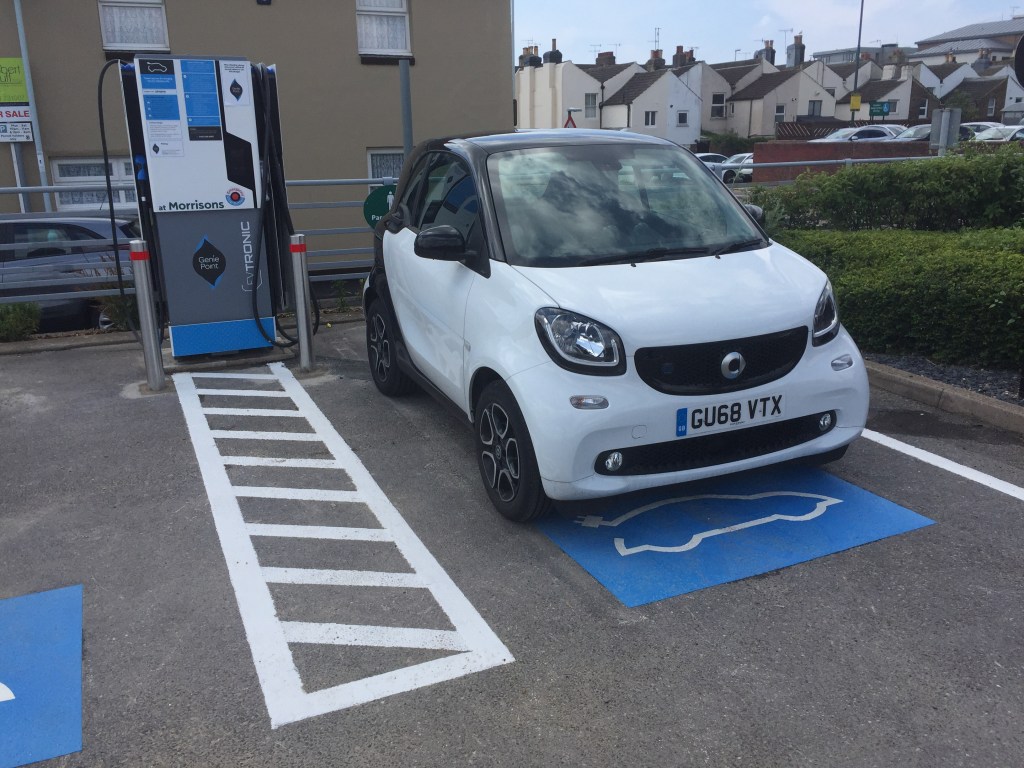
He drove it across the road where he parked the truck, loaded it up and secured it in place. And that was it. My 4 years of car ownership done. Well, not quite. Just after he left I got an email telling me I was going to be charged over £50 because the car was dirty. It’s a pandemic! Normally I would have taken it to the car wash at the local garden centre the day before, but obviously I can’t right now. I’ve been staying away from people since March. Mercedes themselves are exempting people if they miss their scheduled services until the end of the year I think because of Covid. Why are the collection company not doing the same thing with stuff like this?
But at least that’s the final hurdle to jump over as a car owner, and now I can relax. Sort of. I don’t feel that huge weight lifting off my shoulders like I was expecting, but perhaps I will do soon. I think I’m more struck by the reality of an empty driveway in a suburban area with neither good public transport nor quality bike infrastructure than I am with relief to be rid of the car. This is how I lived until I was 27, but back then, after my college years I was riddled with crippling anxiety that left me mostly housebound for years. I did very occasionally use the odd train or bus to get around the local area, but in general I cycled anywhere I needed to go in the town.
It was only in 2014 when I got a full-time job that I came to the conclusion that I had to get some other kind of vehicle, in order to make the daily 5 mile commute at 6:30 every morning. In hindsight part of me wishes I had just kept cycling back then, and believed in myself that I could do that distance. It was only years later that I realised I could.
I decided that a scooter would be the cheapest and easiest way to commute, and so I went to my local Yamaha dealer and saw a bike I liked. I actually ordered it before I took my CBT. I can’t remember why. It seems weird considering my lack of confidence at the time. I rode the scooter for two years in all conditions. I’m quite proud of that especially because I never crashed, even though it was close a couple of times when it was particularly icy.

I really loved riding my Yamaha Majesty S, but over those couple of years I grew more and more frustrated about the climate and the lack of electric innovation in the motorcycle industry at the time (and still am in 2020), so I decided that I wanted to challenge myself and learn to drive in order to buy an electric car. It also gave me the ability to go on longer trips. Doing an EV road trip to Scotland really appealed to me. So it felt like the right choice at the time to get my licence.
With hindsight, the best thing about driving by far was doing those long road trips. The daily trips for commuting and running errands, while fun with the nimble Smart especially, weren’t really memorable. Often times, they were not remotely enjoyable. In general, the scooter was more fun for daily riding and the car was only really good for longer trips. I think the fact that both cars were sub 100 mile range EVs with slower than average charging speeds made it even more fun to me. Especially back in 2016 when the charging infrastructure was far more sparse than it is now. Now it’s so easy that it’s not challenging any more. Which I guess is another reason to stop owning a car.
Having said that, I definitely want to rent an EV at some point when the pandemic eventually ends (hopefully) and go back to Scotland. And this time go all the way to John O’Groats rather than Inverness, which is where I stopped on both my prior trips. It will be really interesting to see the difference in trip time and charging. It will be a monumental difference compared to what I’m used to. Going from 60-80 miles of range and 45 min stops to 300 miles of range and 30 min stops. It’s a whole different world.
Unfortunately, it’s still way too difficult to rent an EV. All of the large rental companies like Enterprise don’t offer much choice, if anything at all. Places like Turo are better but even there, it’s hard to find EVs if you live outside of a major city. I hope this changes soon. Perhaps it will improve in a big way next year in response to the pandemic.
But really rental and sharing are just a first taste of what’s going to happen with MaaS and RoboTaxis. We know that cycling is amazing for travelling locally and touring, especially when quality infrastructure is provided. But in order to travel around in any other way, you need transport solutions that are convenient and connected together seamlessly. The solutions exist to make it work, so we need to get on with it as a top priority.
It doesn’t necessarily have to be done all in one app, but it does have to be convenient. For example, there shouldn’t be a single train station without docked bike or scooter rentals (preferably both). And then when you combine that with autonomous cars it becomes undeniably more convenient than car ownership itself. Even in awkward, rural locations. But we can’t just assume autonomous cars will come along and fix everything in a year or two. We have to offer other compelling options in the meantime. Both because we can’t afford to wait, and because people will still want choice even when RoboTaxis take over.
When I got my drivers licence as an automatic only version to save myself time and hassle, my colleagues didn’t get it. They probably still don’t but I haven’t talked to them in 6 months to check. There was a young girl doing her driving lessons in order to drive a manual car, and I was baffled that the driving test industry had progressed so little. They are totally unprepared for the changes that are about to happen. That aspect in itself will be fascinating to follow.
As for my own experience; despite all the wasted money, unnecessary stress and the eventual realisation that I never needed a car or scooter, I wouldn’t change anything if I could do it all again. I gained a lot of valuable knowledge and skills that I never thought I could. I became a better cyclist for having the experience of operating those different vehicles. It also gives me more points of reference to compare transport options to in the future. 4 years of car ownership and 6 years of total motor vehicle ownership is an interesting experiment in the grand scheme of things, and it feels like the right time to move on. I’ve talked to people my age who have been driving continuously since they were 17. That’s 16 years already at 33. I can only barely comprehend that. Lifetime car owner was definitely never going to be me.
The next couple of years will be a pain in the ass for sure. Having to go out of my way to avoid diesel buses, coaches, taxis, Ubers, trains etc. But soon enough it should start to be more like plain sailing. It really has to.