Tag: Capitalism

  • The Earthshot Prize shoots for the Moon and misses

    I don’t want to be too critical of the Earthshot Prize; it did do some things right. But at the end of the day, the focus was almost entirely placed on innovation and green growth as our way out of this disastrous situation, rather than the real solution of slashing consumption and shrinking the economy. The parts about restoring nature were generally great; in particular the project to restore coral reefs by engineering corals that can cope with the increasing ocean temperatures. But then you had a project about reversing deforestation in Costa Rica, and it was predicated on the idea that it would attract tourists and lead to economic growth. So they fix one problem in order to exacerbate another one. There was another project in the Masai Mara doing a similar thing; protecting animals by getting wealthy tourists to fly around the world and spend their money on useless knick-knacks.

    I think the undeniably best thing about the series was the name. Earthshot is a great name for the scenario we’re in. It makes perfect sense to compare it to the Moonshot decade, because it’s exactly the scale of ambition we need. The parts of the documentary series talking about the problems are also good, but they got the solutions part almost totally wrong. Yes, we need some technological solutions, but fundamentally, it comes down almost entirely to living smaller and more local with less stuff and with better diets. Neither consumption nor population were mentioned a single time throughout the 5 part series or award ceremony. The fact that not a single youth activist was involved tells you all you need to know. The more I think about it, the more it feels like it was made for sceptical boomers. Perhaps the moon landing nod was even more intentional than I realised.

    Then there’s the prize money itself. Rewarding innovations with a million pounds each over 10 years seems like the wrong approach. Obviously, I believe governments should be in charge of the money and saving our world shouldn’t come down to the generosity of private finance. But, if you’re going to go down this path, at least do it better than this. Firstly, a million pounds is not that much money; and if you really believe in green growth as the solution to the climate crisis, and that these innovations can be key to our survival, then I would imagine you’d throw a lot more money at it than they are. I’m pretty sure there are enough rich people in the world who “care” about the planet to the point where you could raise billions for the prize pot relatively easily. Giving away only a million each goes against the urgent message about rapidly scaling up these businesses to save humanity.

    Ideas like a solar powered ironing trike are nice, but do we really need to iron our clothes at all? It is a nice story that the young girl in question was entrepreneurial but it’s too small to make a difference on a global scale at this late stage. Having said that, it should definitely be put into production. As long as people keep ironing clothes at least. The project that allows farmers to cleanly burn their crops in a machine rather than setting their fields on fire gave me a similar feeling. Why do we need to burn crops at all? I’m pretty sure it’s not necessary.

    There were so many moments I took issue with. They showed the ski slope power station in Copenhagen. But didn’t talk about getting rid of waste in the first place rather than burning it to make energy. They talked about global dimming in terms of reducing rainfall in some areas; but nothing about how dimming has limited warming and getting rid of pollution would actually increase warming. They talked about electric cars and an overall growth of vehicles. No mention of cycling whatsoever other than the ironing trike. There was a segment about tyre and brake pollution from cars and buses. Again, no mention of the key role cycling could play in reducing it. They show Singapore’s touristy green areas but ignore the huge roads and growth based economy. There was no mention of Bhutan’s model of economic stability and protection of nature over profit and GDP. At least they mentioned indoor and vertical farming. That’s something we definitely need to scale up urgently.

    The city of Milan winning the waste free world prize was by far the most bizarre award of the evening. All they’re doing is redistributing food to prevent waste. This is being done in various locations all over the world already. There’s nothing unique there that deserves money. Sanergy (creating fertiliser from human waste with insects) and Wota Box (fountain with filter which allows water to be reused many times) were clearly the better ideas. It’s hard to understand why they were snubbed.

    At the end, Prince William talked about how Earthshot is for young people. Well, it isn’t because young people want an end to capitalism and an end to economic growth. This does neither of those two things and you’ve just ended up patronising them yet again. Just like with climate anxiety, the establishment have proven that they don’t get it. They just can’t get past this failed model of treating the symptoms rather than the cause of our problems. Whether it be anxiety or our climate crisis, the root causes are capitalism and economic growth. Until they accept that, the young will see all of this as insult after insult.

    And the final insult is to give Earthshot 2022 to the kingdom of unrestrained corporate greed, the United States. The country that is going to drop all climate funding from Biden’s “Build Back Better” plan. The only thing remaining is to see how far over 1.5c we are in 12 months time (by the 1750 baseline). Hopefully it doesn’t go ahead because they realise by then that green growth doesn’t work. Probably wishful thinking.

    It will unfortunately happen again next year, but it really is debatable how long it will keep going. Prince William says it will award prizes every year for 10 years; but given how little time we have left to act drastically, what use will a prize be in 2030? Maybe they’ll need to take a page out of Bangladesh’s book and host the ceremony on a ship. Maybe one of the prize winners will be some kind of affordable houseboat. That would make sense by then. There will probably be huge demand.

    As a final aside; as we were watching the episode of Earthshot Prize about clean air, near the end, I heard the neighbour’s petrol lawnmower so I had to rush around closing all the windows. You couldn’t have timed it better. But with any luck, he watched the award show and decided to buy a battery mower to boost our economy.
  • Covid will Never End Until we act on Climate

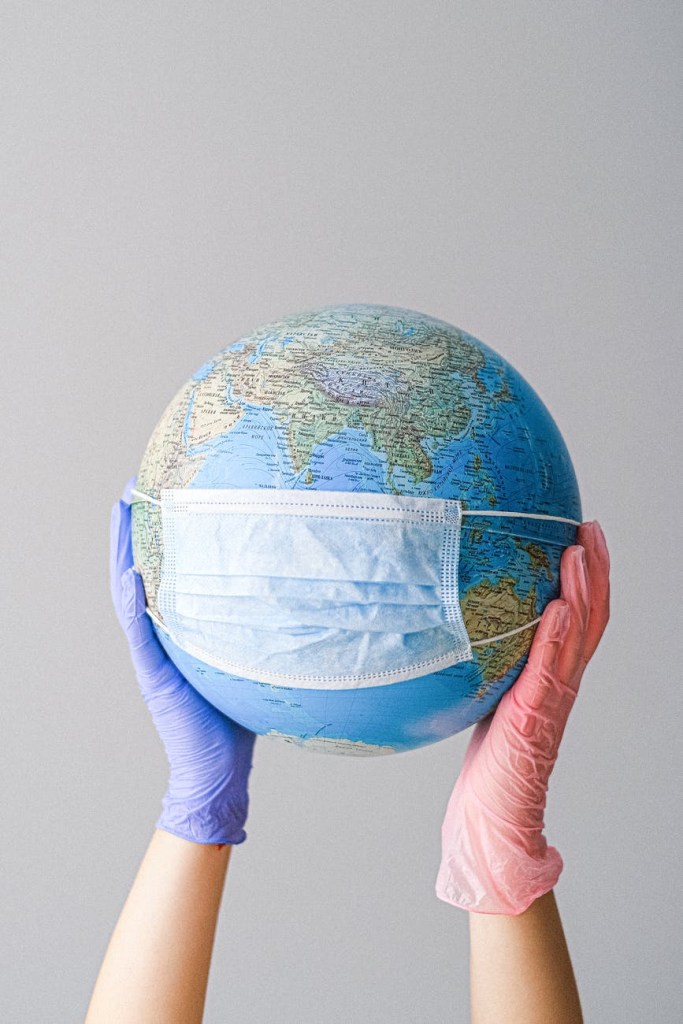
    After a year and a half of covid chaos in the UK and around the world, I think it’s fair to assume at this point that covid-19 will not end until we get serious about the climate crisis. Specifically, that means ending capitalism and reducing consumption drastically and immediately.

    Technically, New Zealand has proven that you actually can continue with capitalism while still keeping covid at bay and protecting your citizens. But you need to do short and sharp full lockdowns every time local cases begin. We’ve seen just today Jacinda Ardern putting NZ in lockdown for one locally transmitted case. That might sound strange to people in the UK for example since we currently have 30k cases per day (officially) and no restrictions, but it’s what a good government does.

    But because most countries seem incapable of learning that very simple lesson, we won’t end covid globally that way. And even if we could, it wouldn’t solve the aforementioned capitalism and consumption issues that are wrecking our climate. So that leaves climate action (specifically system change) as the only option.

    If we end capitalism, and we move to a type of system where we live more local lives and people are provided the basics to live, then it would be incredibly easy to stay away from others and end the spread. People wouldn’t be forced to go to work where they could catch or spread the virus. A roof over their head, food on the table, water, heat, etc would be guaranteed. Poverty and homelessness would be consigned to the history books.

    Every day we keep doing nothing, we’re making both crises worse and worse, leading to unnecessary suffering and the deaths of a huge number of people. We have to ask ourselves whether this is really the way we want to live when we can have so much better. Will we say enough is enough and force an end to the type of politics that is unwilling and incapable of doing anything about covid or climate?

    I really hope so, but it has to be soon. COP26 can’t be a green growth summit with weak goals for 2050. This system isn’t working. Take a look around you and ask yourself how much of what you see is making your life better and happier? And when you realise not very much of it is, stop living the way society wants you to.

  • Doing Something about the Climate Crisis isn’t Better than Nothing

    I’m not even sure this is true any more

    Recently, people often tell me that I should accept any progress that is being made towards sustainability. But I always push back on that. The climate crisis is now so dire that only huge, immediate change can give us any real hope of a future we can look forward to.

    We know that we have to get emissions to zero as soon as possible, capture greenhouse gases from the atmosphere, and deploy solar radiation management techniques. That’s what the latest science is saying. Switching to EV ownership, or slowly electrifying bus fleets over decades aren’t things I’m going to support. They’re arguably worse than doing nothing. Because when you don’t understand and consider the whole problem, and just take various measures that aren’t part of a joined-up strategy, you take your focus off of what must be done, and waste precious time as well. Two things we absolutely can’t afford.

    Obviously I don’t want to actually do nothing. But if we took the time to understand the full scale of what we’re facing, society would be far more likely to come to the collective realisation that the entire system has to change.

    The more I think about this, the more I realise how much of a problem it is. It applies to almost everything. From trying to build bike lanes when in reality the only thing we have time for is banning cars; to net zero carbon targets where planting forests that could later burn is seen as a solution. The entire system we have right now is just trying to present guaranteed future failure as a solution we should get behind.

    It’s time we started talking about real solutions. The big solutions. Banning cars, banning domestic flights, cycling, public transport etc. The types of things that can have an impact now, when we really need it. Not in 30 years when it will be too late.

  • How do you live sustainably as a Billionaire?

    If you were a billionaire and you chose to live a sustainable life from this point forward, what could you actually spend your money on? It’s a pretty interesting question.

    Living sustainably means creating the lowest impact you possibly can in every area of your life. Your home, transport, food and drink and everything in between. I’m certainly not an expert on this. I just think it’s an interesting topic to speculate about. And it may not be long at all before the age of Jeff Bezos buying the biggest house in LA without a second thought is over with. So why not prepare ourselves for that day now?

    I imagine that for housing, you’d be limited to either a tiny house of some description, or the smallest flat that could meet your living requirements with no excessive space. The only real difference between the rich and the poor would be the area the building is located, and the materials used in the construction.

    Transport is quite a simple one as I see it. We will have autonomous cars pretty soon, and I imagine that as part of this transition, you will no longer be allowed to own a car for your own use exclusively. And you certainly won’t be able to accumulate giant garages of exotic fossil fueled sports cars. Money will certainly give you access to more luxurious autonomous vehicles, but it will still be a far cry from the private jet lifestyle we see today. We will likely also see Hyperloop emerge as a replacement for flying and this will likely offer private pods for the wealthy in a similar way as we see today. But you won’t own them as the billionaires of today own their jets. So again, another area where more money won’t give you the huge difference in experience which is currently the case.

    When it comes to clothing and general stuff, we will all be living in these small homes, and any stuff you buy will need to be useful and not excessive. You’ll still be able to use your wealth to buy the nicest clothes out of the most exclusive sustainable materials, but you’ll be limited in how much you can own. We will all have smaller wardrobes, filled with much higher quality stuff that we will actually wear. This will be a huge improvement over the current situation, and will massively narrow the gap between the haves and the have-nots.

    I could go on but I think this makes the situation quite clear. The future that we know is coming requires us to live smaller, more locally, with less (albeit higher quality stuff). There will be no mansions, giant yachts, private jets or supercar collections to spend your billions on. So perhaps this has something to do with the fierce resistance to the ideas of Bernie Sanders, Jeremy Corbyn and anyone else who dares spout just a tiny amount of this thing called common sense which has been long forgotten in world society.

    The end of capitalism is required in order to make a better world, and they will fight us all the way. Which doesn’t really make a lot of sense considering we want a better world. It’s not like we’re threatening to blow everything up like a villain in a blockbuster movie after all.

Design a site like this with WordPress.com
Get started