Tag: Capitalism

  • Does Cycling have a future in the UK?

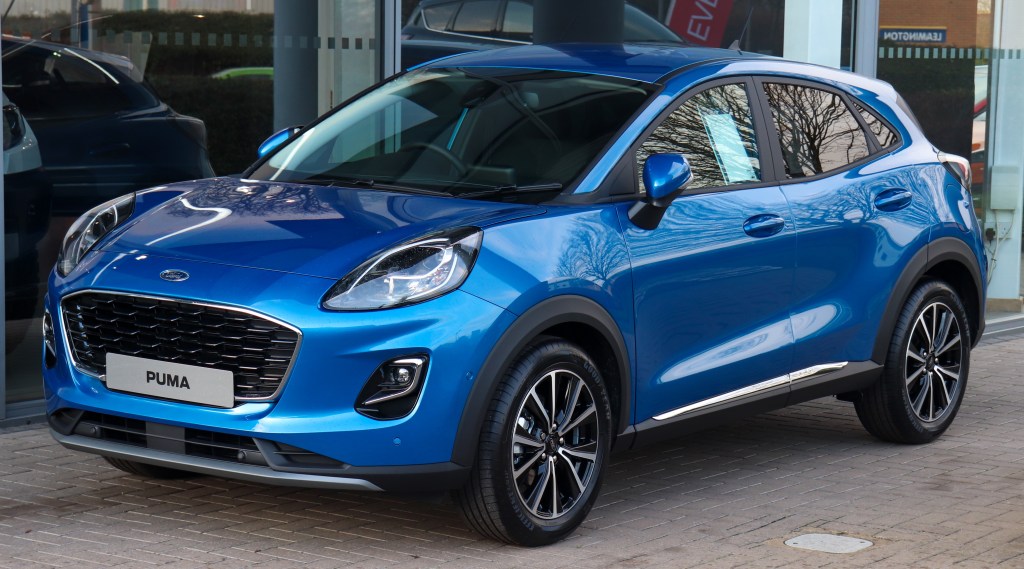
    Considering that the already paltry cycling and walking budget just got slashed by two thirds; you might expect me to throw my hands up in exasperation and head on down to the nearest SUV dealership (that’s pretty much what they are these days) and place an order for a trendy Ford Puma or equivalent from any other brand.

    Shockingly though, I’m not going to do that. Our future isn’t to give up and fit in. And here’s why.

    Thankfully, this isn’t our future. Photo: Vauxford

    This latest budget cut and effective middle finger to cycling for transport in the UK just reaffirms my strongly held belief that we need to ban private cars and use the roads as bike lanes in the very near future (as in now). I already felt that time was too short with respect to the climate crisis, and that half-decent infrastructure change, built over decades, would be grossly insufficient to make any real impact. But now, not only do we know that slow, incremental change will be completely ineffectual in any relevant timescale; but we also know unequivocally that there will not be any significant infrastructure change at all, even in the medium term. The dream the eternal optimists in my local cycling group had of ubiquitous, Dutch style infrastructure is completely, utterly dead.

    Having said that, it probably still won’t be enough to deter these people, which is partly why I decided to stop involving myself in the local advocacy. Metaphorically banging my head against a brick wall in those meetings and Facebook groups was growing a bit tiresome, to say the least. So, I guess they can continue lobbying the town council that has no money and no power to do anything about the roads anyway; and the county council, that is openly trolling us about cycling, and one of the handful of counties across the UK rated as 0 out of 5 by Active Travel England. Not that they have much funding to give out after this first tranche anyway. I hope they wake up, but I’m not so sure they will.

    Either way, I think I’ll stick with offering ideas that might actually lead to achieving something in short order, rather than next century.

    We’re never going to get infrastructure. We need to empty the streets of cars.

    So I suppose you could almost call these cuts a good thing? That may be going a bit far. We do need some infrastructure to separate bikes from the vehicles that do remain after we ban private cars. There will still be buses, coaches, trucks and some vans (although no doubt many of them will be replaced with cargo bikes). But the good news is that this kind of infrastructure wouldn’t be hard to add later on. With so few vehicles on the roads, and buses not getting stuck in traffic, there would be no road rage and bikes and bigger vehicles would be perfectly able to share the mostly empty space.

    The other type of infrastructure – my favourite kind, the LTN, or Low Traffic Neighbourhood, is so cheap, quick and easy that it almost doesn’t need to be mentioned. But just as a quick refresher, you put some bollards at the ends of a road to stop through traffic, and that’s it. It’s so simple, even a Tory could understand it. I don’t think they want to, but still.

    Speaking of Tories, I’ve been thinking recently about the Highway Code changes, where vulnerable road users have been given priority at junctions and so on. It changed over a year ago now, but I still see Highway Code trending on Twitter almost every day. I know the rules changed before Boris Johnson got booted out of office, so on first glance it wouldn’t appear that a pro-cycling PM would want to stoke increased tension on the roads by changing the Highway Code rules and then not publicising it very well. But it’s not as if Boris Johnson was ever that supportive of quality infrastructure. Like most Tories, he told people to cycle, without actually providing any infrastructure to do so. Other than the public hire bikes (operated by private company Serco of course). And he didn’t even implement that. It’s commonly known that Ken Livingstone, the London Mayor before him, green-lit the project.

    When you consider this, it does seem more plausible that the Tories could have been planning all along to turn cycling into a big culture war topic at the next election. Seeing what Sunak and his cabinet are willing to do in terms of demonising asylum seekers, underfunding the NHS, disrespecting and underpaying striking workers while refusing to come to the negotiating table with serious offers; going after “woke cyclists” seems like an obvious next step. The Highway Code change may have been a happy coincidence for them, but it’s irrelevant. What matters is it sets them up perfectly.

    So what can we do? I guess the first thing would be to just stop thinking about Dutch style infrastructure projects. As I’ve mentioned above, some people are a bit beyond help in this regard; but those of us in the real world need to focus fully on three aspects. Banning cars, bike parking, and LTNs, as previously mentioned. These are all things that can be and are being delivered to varying degrees by progressive councils (or even moderate councils) for very little cost. Banning cars is the most difficult to achieve in total, but we do see some towns and cities banning cars from historic centres, or introducing low emission zones, which I think are over complicated and not worth doing personally. I’ll talk more about banning cars later. As far as parking and LTNs, town councils can’t build bike paths, but they can get rid of car parks and replace them with bike parks. That’s certainly the biggest tool available in a situation like here in Worthing, where the town council is pro-cycling and the county council is about as oppositional to cycling as it’s possible to be. In other places where the councils in charge of roads are more amenable to our demands, LTNs can be introduced rapidly and make a huge difference in making areas feel safe and welcoming for people not in cars. They can start with temporary schemes to test how they would work before being made permanent, which is incredibly useful. If your local council has the power to remove street parking, then that can also be a quick way of making progress by replacing spaces with Bike Hangars for example. There’s also the potential for town councils to turn vacant town centre shops into indoor bike parking. So there definitely are ways you can push your council, even if they don’t have control over roads or bike lanes.

    We can achieve a lot through those three avenues, but to ban private cars entirely, you need central government to play ball; and that is where you encounter that familiar problem which tends to come up when you want to do anything good in society. It’s Capitalism, and the urgent need to dispense with it in favour of Degrowth Communism. This is partly why I haven’t been posting as much recently. Every time I come up with an idea for a problem that needs fixing, ultimately it always comes back to the economic system. The ultimate solution is always the same, whether it be cycling, public transport, inequality, healthcare etc.

    However, we do at least know what is officially no longer on the table, and that is a very helpful thing in my view. With this government (and probably the next one too), we’re only going to get some tarmac shared pavements and some paint. Once we all (or most of us) accept that, I think we can become a lot more effective in terms of potential protests and making a real impact. I’m thinking along the lines of the Just Stop Oil slow marching protests, but on bikes. I can definitely see that kind of thing being the result of the anger and desperation people who want a cycling future are feeling at the moment. It’ll be interesting to see if it happens before or after the government officially start their anti-cycling culture war push. But either way, I think it’s inevitable at this point.

    When you look at the EU pushing for e-bikes and cargo bikes, with the uptake being so strong in those countries; the damage Brexit has done to cycling imports and exports; and you see us going backwards from a position most people didn’t think we could go backwards from; you can clearly see how untenable this situation is. It can’t be allowed to go on any longer. It’s time for very targeted campaigns and mass protest.

  • The Endless Climate Fight of Consumption vs Production

    Boycotts + campaigning to take down capitalism

    We’re stuck in this endless loop of arguing about how we get started dealing with climate change in a serious way. Until we reach a consensus about what will actually work, we won’t get anywhere. We will just keep going round in circles while we put giant amounts of emissions into the atmosphere every single day. I think you can fit the argument into these three main categories.

    Right wing politicians and most of the media focus on individual carbon footprints, and shame environmentalists who aren’t perfect in every way.

    Many climate activists say individual action doesn’t work and that we need to change the system first.

    People like me say it’s boycotts that will bring down the system from the bottom up.

    If you follow different environmental and mainstream media channels, as I do (as little MSM as I can get away with these days); then you’ve no doubt noticed that no one can ever agree and we just go round and round forever. Climate discourse hasn’t moved forward in years. You could play back something now from Good Morning Britain or BBC News that aired before Greta started school striking, and it would be practically indistinguishable from what you see today.

    It’s time to end this nonsense once and for all.

    How I see it, bringing down capitalism from the bottom up is the only option. The neoliberal political systems in pretty much every country are designed to prevent an uprising occurring at the ballot box. And even if it was possible; even if there were candidates allowed to stand who believed what many of us do, it’s definitely not possible in the next couple of years, which is all the time we have, if even that.

    Those who say that many of the choices we make to pollute are made for us are correct. Many of us are effectively forced to do things like drive a car, fly, drink bottled water and consume things that are made of plastic much more than we’d like. This is because of political choices made by the right wing that mean infrastructure is not fit for purpose. I’m not arguing those things. But what I am saying is that there are plenty of areas where we do have real, affordable choices that put pressure on polluters financially. That’s how you bring down capitalism.

    If you only consider things that are the same price, or less than what we’re doing now, you rule out plastic free organic food and things like that for a lot of people. But so many people could choose to not own a car if they live in an urban area, or stop buying useless plastic junk. I know there are lots of things I used to buy that cluttered up the house that I now avoid. There are ways most of us can cut down on our consumption of things we don’t need, cut our spending and put pressure on the capitalist system. If we live in smaller homes, with lower heating and cooling requirements for example. Even people who are forced to drive because they live in the suburbs and have poor, expensive public transport and no bike infrastructure can find ways to put pressure on the capitalist economy. Spend money only on the necessities, and the things that mean the absolute most to you.

    And I’m not saying that boycotts and consumption reductions should come at the expense of campaigns. They go hand in hand. You may be able to boycott or reduce your consumption of certain products, but maybe you still have to buy the same plastic packaged fruit. That doesn’t mean you can’t join a campaign calling on the supermarket to get rid of the plastic.

    We have to do what we can to pressure the polluting status quo with all the tools we have available, and we have to stop going round in circles being dictated to by the right wing media and its obsession with climate hypocrisy. It’s ok to be annoyed about wealthy climate activists and celebrities flying around in their private jets and living in mansions. But we have to stop short of falling into the trap of believing that their overall message should be voided by their individual actions.

    We need to all reduce our consumption in whatever way we can. We all have something we can do less of, and those of us in more privileged positions have certainly accumulated more crap. We also have the moral duty to offset what those less fortunate can’t do. And then we need to come together to campaign and pressure.

    You can’t use imperfection as an excuse to do nothing, and you won’t have success campaigning profit driven industries when you keep buying as much of their product as you always have.

  • Be wary of car brands infiltrating the bike industry

    So far, just an overpriced standard EMTB. But be wary of speed restrictions.

    Car companies. They’re the bad guys who eliminated urban cycling in the UK and elsewhere. They brought us the joy that is one giant SUV after another on our narrow roads; originally built for bicycles, narrow vans and the odd truck. Now they want into the e-bike industry as well. Haven’t they done enough damage?

    To be fair to them, there are a couple of potential benefits they can bring to the cycling industry. But before I get to that, I want to run through the obvious downsides.

    High tech solutions to questions no-one asked

    They’ll try to advocate for cars and bikes coexisting without infrastructure, and push overly complicated technology for bikes and cars to talk to each other. Just as momentum starts to build for bans on private cars in urban areas, they’d love to set us back and seduce neoliberal lawmakers (who eat this kind of stuff up) with plans to make cars and bikes work together by leveraging new technology. Why do the obvious thing of getting rid of the cars and having all that glorious space and clean air, when we can have cars and bikes that talk to each other and traffic lights to avoid collisions? It’s not as if we could use our eyes and ears to see bikes and pedestrians coming or anything.

    Speed

    They’ll try to increase speeds in e-bike regulations from 25kph to make them more like small motorcycles. This is a big one. Car companies are supposedly about speed and efficiency, so of course they won’t be able to resist lobbying their mates in power for higher e-bike speeds; and they may well think why not get rid of the pedals too while we’re at it? Never mind that you get stuck in traffic and passed by people on bikes gliding along to their destinations before you.

    Greenwashing

    They’ll try to use cycling to greenwash their businesses so they can phase out fossil cars or privately owned EVs later. Clearly, the car industry loves a bit of greenwashing. Manufacturers often promote hybrids while giving the impression that they’re better than EVs because you don’t have to plug them in. Just ignore the fact that you still have to fill them with explosive fossil juice. Or they make a car that powers the wheels like an EV, except the only way to charge it is with a tank of petrol. Seriously. Nissan calls that e-Power.

    Presumably the next logical step would be to distract people with some e-bikes to make you look really green. But of course if you want to travel further than e-bike range, you’ll still want that aforementioned giant fossil powered SUV. Ok, maybe I’ll be charitable and say it’s a hybrid by 2025 when the world’s melting.

    Survival

    As a desperation move, I could imagine a car company or two buying a bike company and rebranding it in a last ditch effort to turn around their flagging fortunes when private car sales drop off a cliff. Or, alternatively, I could see it in the case of a manufacturer that gets caught particularly flat-footed during the EV transition. A rapid pivot to Micromobility might be the only play left to save the company.

    The Positive(s)?

    I did promise some positives, so here they are. Or here’s one anyway. All I could come up with. The car industry will bring a new perspective and prioritise vehicle grade components that last for urban journeys. Especially for cargo bikes, trikes and quads. But, the thing is that you can get a new perspective without resorting to embracing the car industry. Almost anyone from any industry can come in with a fresh vision of what bikes should be (anything without a derailleur would be a start). It’s not worth the risk of the automotive sector wrecking the bike industry. And I’m not saying that as someone who thinks much of the bike business. I’m very much of the opinion that it requires a massive shake up.

    So… I guess that makes zero positives actually…

    Before I write them off entirely, I should mention that this is assuming the current neoliberal system stays as it is. The system which of course will kill us all in due course if it does. However, if / when we do nationalise the car industry under a new economic system, it becomes a whole new ball game. You would have the engineering expertise of the auto industry but without the profit motive. In that case, you could repurpose their vast factories to make cargo bikes at record pace, and you wouldn’t have to worry about them lobbying for turning e-bikes into small motorcycles, since there would be no one left to lobby. The government (and the people) would be running the show.

    So technically there was one positive in the end; but it probably won’t be a possibility any time soon when you look at the state of our politics. For example, Penny Mordaunt says she will cut fuel tax in half if she becomes PM (sigh).

  • Yes, we really must ban private cars

    Logically, every day that goes by where we do practically nothing to address our climate crisis, the more reasonable the idea of banning private cars (especially in urban areas) should become. But in reality, it doesn’t feel as if we’re making any progress in this regard. People generally aren’t warming to the idea, or at most are warming to it at a snail’s pace.

    I’ve been watching Al Jazeera a lot recently. They seem to be the best of a bad bunch when it comes to international media outlets regarding the climate crisis; especially when it comes to climate related suffering in the Middle East and the general global south. They still talk about GDP and economic growth being a good thing. They talk about F1 and World Rally straight after stories of record droughts, sandstorms, famines and so on. But at least they always highlight inequality, human rights under threat, and other uncomfortable issues that other outlets shy away from.

    They’re extremely good at documenting the dire state of our climate. But when it comes to solutions, it’s a very different story. I don’t really see much about solutions, and I see very little possibility of them suggesting anything other than mainstream favourites like renewable energy and electric vehicles. At least not in the near future. So if the best mainstream media outlet isn’t informing people about the real solutions, then what chance do we have of change?

    You might be thinking something along the lines of “yeah, but that’s mainstream media. What about social media and YouTube in particular?” Well, I do agree that YouTube is where the progressive ideas are going to come from. But in my experience, progressive news and climate related channels are still pretty small when you consider where we are in the crisis with seemingly endless weather extremes every day. And when I comment on these channels about a private car ban, I don’t see a lot of positive feedback. I’m more likely to attract either a troll or someone who’s supposedly on my side but who can’t imagine life in urban areas without cars. By now, it shouldn’t be controversial to end the plague of cars in our urban areas, but it is. It’s extremely controversial; even in places which could easily be cycled by unfit people if most of the cars were gone.

    We all saw that non-cyclists were riding bikes during the original spring 2020 lockdown. But it didn’t lead to permanent change because the establishment didn’t want it to. I’ve talked about this a lot. Some cities and countries did use it as an opportunity to change a little bit; but no one had the bravery to go the whole way and severely limit private car use. Even when it’s clearly the fastest and cheapest way to get people cycling and to slash emissions from the transport sector.

    So what happens next? My best guess is that nothing will happen until maybe later this year. The coming summer heat records combined with food supply issues and energy prices going into the winter could cause a societal tipping point around the world. But it will need to be an apocalyptic blend to make humanity wake up and start doing things that make sense (like banning private cars). The crises we’ve accumulated so far have not been enough, despite being pretty terrible. The climate crisis, the war, covid, cost of living, monkeypox, avian flu etc.

    While we are seeing the status quo starting to struggle, we’re not yet at the point where people begin questioning everything en masse. But this is only going one way. The resurgence of unions and the disabling of a large percentage of the global workforce with long covid show that the current exploitative system can’t keep going for much longer. The question is how much longer; and if we will still have time to act once it does fail. One thing is for sure; it won’t be any form of media that changes the course of humanity. I just don’t see any progressive outlet growing fast enough to even challenge mainstream media’s viewership before our various crises start dictating society’s direction.

Design a site like this with WordPress.com
Get started