Category: Miscellaneous

  • How to Fix the UK Train Network

    As I’m only a few months away now from giving back my Smart EQ electric car, my second EV, and my last privately owned car, I’ve been thinking about how I’m going to get around in future. I don’t tend to travel very far very often, and cycling works for me to get around most of the time. But when I want to go to Scotland for example, trains are the obvious choice. They’re efficient, they’re fun, and they’re electric in many cases.

    As a child I loved trains, and at one point I wanted to be a train driver. Now that I’m rediscovering my love of rail, I suppose it may still be possible, but that’s something to consider in the future. As far as the train network itself, it has many problems, and as someone who hasn’t been paying much attention to it for a long time, I’d like to offer my fresh perspective on what can and should happen in order to bring the British rail network up to the level it should be.

    Trains are one of those things that the British invented before they got left behind as other countries surpassed them. If you look at the Japanese or Dutch railway systems now, and then you look at our trains in 2020, you should feel ashamed and embarrassed to be British. I know I do.

    One of the main reasons we’ve put ourselves in this position is because of the nostalgia people feel in this country towards those good old days. Most of the people who truly care about trains are the same people who have grown up with and have great attachment to steam and diesel rolling stock. It has prevented us from moving forward and causing this huge resistance to change. But there are other reasons too. Politically, we’ve seen awful government after awful government who haven’t been willing to invest. And because our society has fully embraced the car to the detriment of trains, buses and cycling, our ancient and crumbling train infrastructure has been left to rot. Even keeping it from disintegrating further costs huge amounts of money which is then translated to sky high ticket prices. For a service that doesn’t even come close to justifying this cost. It would surely be cheaper to just rip it all up and basically start again.

    Everything about rail travel in this country feels antiquated and long overdue a total overhaul. From the track and stations to ticketing and railcards. We need full electrification, we need contactless payments and Oyster support nationally, new trains, timetables you can rely on. And most importantly, if the prices are to remain high, then the service quality has to match.

    In the coming posts, I will go into more detail about each of the topics I’ve outlined here.

  • How do you live sustainably as a Billionaire?

    If you were a billionaire and you chose to live a sustainable life from this point forward, what could you actually spend your money on? It’s a pretty interesting question.

    Living sustainably means creating the lowest impact you possibly can in every area of your life. Your home, transport, food and drink and everything in between. I’m certainly not an expert on this. I just think it’s an interesting topic to speculate about. And it may not be long at all before the age of Jeff Bezos buying the biggest house in LA without a second thought is over with. So why not prepare ourselves for that day now?

    I imagine that for housing, you’d be limited to either a tiny house of some description, or the smallest flat that could meet your living requirements with no excessive space. The only real difference between the rich and the poor would be the area the building is located, and the materials used in the construction.

    Transport is quite a simple one as I see it. We will have autonomous cars pretty soon, and I imagine that as part of this transition, you will no longer be allowed to own a car for your own use exclusively. And you certainly won’t be able to accumulate giant garages of exotic fossil fueled sports cars. Money will certainly give you access to more luxurious autonomous vehicles, but it will still be a far cry from the private jet lifestyle we see today. We will likely also see Hyperloop emerge as a replacement for flying and this will likely offer private pods for the wealthy in a similar way as we see today. But you won’t own them as the billionaires of today own their jets. So again, another area where more money won’t give you the huge difference in experience which is currently the case.

    When it comes to clothing and general stuff, we will all be living in these small homes, and any stuff you buy will need to be useful and not excessive. You’ll still be able to use your wealth to buy the nicest clothes out of the most exclusive sustainable materials, but you’ll be limited in how much you can own. We will all have smaller wardrobes, filled with much higher quality stuff that we will actually wear. This will be a huge improvement over the current situation, and will massively narrow the gap between the haves and the have-nots.

    I could go on but I think this makes the situation quite clear. The future that we know is coming requires us to live smaller, more locally, with less (albeit higher quality stuff). There will be no mansions, giant yachts, private jets or supercar collections to spend your billions on. So perhaps this has something to do with the fierce resistance to the ideas of Bernie Sanders, Jeremy Corbyn and anyone else who dares spout just a tiny amount of this thing called common sense which has been long forgotten in world society.

    The end of capitalism is required in order to make a better world, and they will fight us all the way. Which doesn’t really make a lot of sense considering we want a better world. It’s not like we’re threatening to blow everything up like a villain in a blockbuster movie after all.

  • Why I’m so Excited about Smart Glasses

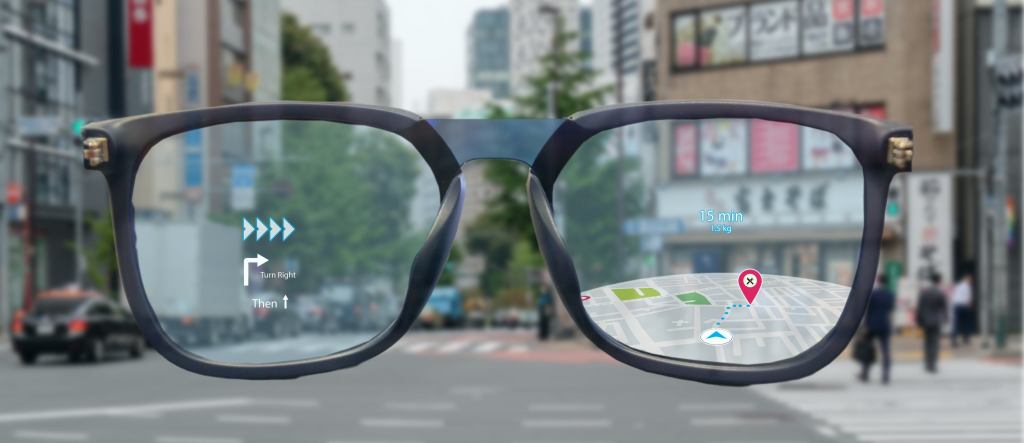
    Smart-Glasses are by far the most exciting thing in tech right now as far as I’m concerned. Recently we’ve seen several examples of different approaches, and different features coming to market. Intel has a prototype which displays text in the eye-line for a minimual distraction approach. North have their Focals 2.0 which offer something at the other end of the spectrum, with an interface more akin to a smart watch.

    And then we get to the other types of Smart Glasses. The Amazon Echo Frames and Bose Frames both use a similar style of directional audio to either give you music or responses to your Alexa queries. This tech which allows you (and theoretically only you) to hear decent quality sound while keeping your ears open to the world, or your colleagues for example, is really cool. And then there are video recording glasses such as the Snap Spectacles. The Spectacles 3 don’t let your record video in the way I would like to allow me to film a bicycle ride for example, but they do appear to have the tech inside to allow it if they chose to do so. Which means that someone else can do it, and very likely will do very soon.

    But what we’re really after is the melding of all of these functions in one product. High quality video recording, voice assistant built in, high quality directional sound, a screen or projection system which provides you with important, contextual information (such as cycling directions), and top it off with great battery life. That’s what’s exciting me right now.

    Who’s going to be the one to do it? Google, Apple, Intel, or will it be a company like HTC, who could take a punt on it in the same way they did with the Vive VR?

    Personally it doesn’t bother me who. I’d love to see everyone get involved. But after watching a comprehensive review of the North glasses, I’m not convinced that the full smartwatch type experience is the one. It looks impressive, but I don’t think it’s the right approach in this market. Just like we found out with smart watches, we don’t need a watch app equivalent to every app on our phones. Workout apps yes, but not a lot else in my view. So I think the novelty would wear out incredibly quickly. Quicker than when I upgraded my Nintendo 3DS to a New 3DS XL.

  • Electric Cars are Getting More Expensive, Not Less

    If you want to talk about an industry completely tone-deaf to the world, take a look at the car industry. Not only does it not want to change, but it doesn’t even understand its audience or the market.

    What customers are crying out for now is affordable electric vehicles. We know that most people don’t travel that far each day, and we also know that the charging network is practically unrecognisable compared to when I started driving an EV in late 2016. So when I saw that both the new Smart lineup (which is almost unchanged) and the e-Up! triplets (inc Seat and Skoda) are closer to £20k than £15k, it took the wind out of my sails.

    The only car company that appears to get it right now is Uniti. The car starts at a relatively affordable £15k, and then there are options from there. But the key thing is offering a car for around that £15,000 mark. All these other companies are not offering smaller (more sustainable), cheaper battery size options, despite the fact that shorter range EVs are so much more liveable now compared to just a few years ago. There’s no logic being applied here.

    Seeing those prices really made me feel great about my decision to get out of my current contract next year and go car free. I think the rise of micromobility options (and genuine affordability) will take the automotive industry by surprise and put them into difficulty. And that would be great. We want them to be scrambling and having to divert huge resources into EV car-sharing and micromobility.

    And of course, we need more companies in the auto sector like Tesla and Uniti, who really get what the car should be in 2019 and beyond.

Design a site like this with WordPress.com
Get started