Tag: Consumption

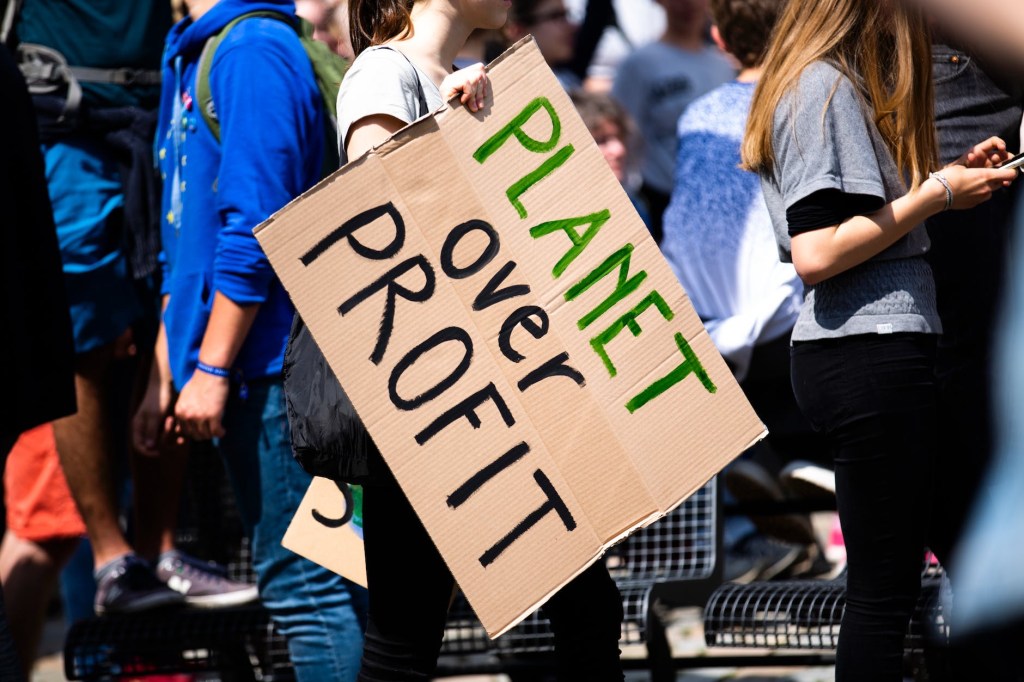
  • The Climate Crisis – It’s BOTH Population AND Consumption

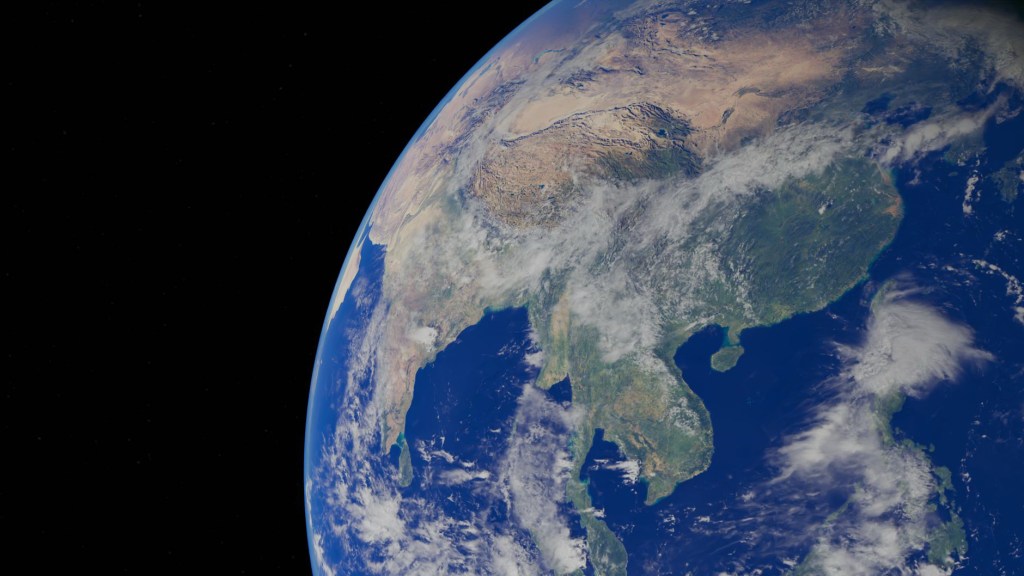
    Picture of Earth from space.
    Countries must work together on managing populations and resources evenly

    This is a topic that drives me insane, and has done for years. Many people are often quick to brush off any attempt to characterise the climate crisis as an overpopulation crisis (which it is). They want to say that population isn’t a problem at all. They insist that if the wealth accumulation of the richest people in the world, and their gargantuan consumption habits were curtailed; then that would be enough to stop the climate crisis getting out of control. I’ll come back to this shortly to discuss why they are incorrect. First, I will briefly cover why promotion of what we could reasonably at this point call traditional climate policies is foolish.

    We’re all familiar with talk about recycling, choosing to fly less and make individual decisions. We’ve been told for decades about how small things like these, plus renewable energy and electric powered everything will be enough to bring the raging climate under control; without the vast majority of us having to change our lifestyles at all. These days it seems like they mainly advocate for easy measures like putting solar panels on our roofs and plugging in our private cars rather than filling them with explosive, fossil derived liquid. It’s all very simple stuff. They try to not scare the public.

    I’m not going to go to deep into why basic green technology solutions, individual small choices, and maybe vegan diets are not enough by themselves to solve the climate crisis in this article. It’s frankly a boring topic that’s been done to death. I’ve talked a lot previously about why we need to reimagine how we’re going to live in future in every way. Just modifying how we already do things today, but powering the same things with electricity, is obviously not going to cut it. The changes we now need to implement in order to make a dent in the crisis will blow your mind if you haven’t considered this before.

    As a very quick recap of my ideas from previous articles, this means ideas along the lines of, for example:

    • Smaller homes and communal rather than private land
    • A vegetarian (and eventually vegan) food system which takes the individual choice (to buy expensive organic produce) away from citizens, and makes food high quality, delicious, and universally available and affordable.
    • The slashing of military budgets
    • No private cars (unless absolutely necessary)
    • Less personal stuff and pointless junk
    • Items such as tools that are shared in communities and built to last
    • Better public transport, but also a focus on less travel; and slower travel when we do go places
    • Severely restricted long distance travel (except for family emergencies etc)
    • The concept of tourism as we know it being redefined completely

    Now that’s out of the way, and we’re clear that only massive changes to our consumption habits are necessary to even touch the sides of this crisis; I want to bring population back in.


    Why the population critics are so wrong

    Not only do these people and organisations deny that the current global population is a catastrophic problem for the climate; they don’t even acknowledge the need for almost all of us to make massive changes to our consumption habits and way of life.

    Anyone who’s placing responsibility for this entire crisis at the feet of the rich, while making everyone else feel excused from having to act, is at best irresponsible, and at worst, downright dangerous. We need as a society and as a world to get serious now about how bad things are; how bad they’re going to get even if we start doing everything right; and then we need to figure out the next practical steps that all of us can take toegther.

    I hate the rich as much as anyone. But it’s way too easy to blame them and go about our own overly consumptive lives in blissful ignorance while the world around us goes to shit. That’s the last thing we can afford to do now. We’ve had enough of greed and indivualistic thinking. It’s time for unselfishness and collectivist thinking to take over.

    I highly recommend watching GREENWASHED, the excellent film on this subject, released last year by Dr Sofia Pineda Ochoa on YouTube. It gets deep into the statistics and the climate situation (although things will have worsened significantly in the year or so since it was made). It features well known experts on the natural world like Chris Packham, as well as climate, population and economic experts. They did their homework so well that it felt unnecessary for me to do a bunch of my own research for a blog that hardly anyone is going to read anyway. The vast majority of people in 2026 don’t care to read a thoroughly researched piece about an important topic. Let’s be honest. You and me are the odd ones out who still care about this stuff.

    One statistic from the film that really amazed me was the calculation by Cambridge University based Ecological economist Partha Dasgupta that the Earth could sustainably carry 3.3 billion people if every single person was on a salary of $20k.

    Pretty much anyone should be able to grasp that 3.3 billion people (a bit more than a third of the current global population), each consuming the global average of someone on that kind of low income (from a western perspective), is a very, very long way away from where we currently are. And it’s very obviously not possible to achieve that just by forcing the richest people’s consumption down to the levels of the upper-middle class as it exists now for example.

    It requires, as I said earlier, a total reimagining of every element of how we live our lives and how our societies function. Nothing less than total transformation will suffice. Anyone who says anything other than that, is frankly full of shit.

    And that’s just people who advocate for what I call the traditional type of climate action I mentioned earlier. The mainstream discourse around population is actually dominated by the false talking point that low birthrates in many countries threaten our existence and our economies. Obviously these types of people want GDP growth for their ideologies and their own personal bank balances. But I’m far from convinced that a lower birthrate would even lead to lower GDP at this point, because of the advance of robotics and AI. Even setting aside immigration. So their obsession with birth rates is probably more down to stupidity and the typical fear associated with the conservative psyche than anything actually real. Also, the idea that a decreasing birthrate would lead to our nationalities ceasing to exist in future is just for the birds. It wasn’t that long ago that the UK population was approximately 20 million less than it is today. According to the ONS, it was 50,381,500 in 1950 (which is impressively specific). No one back then was saying our population was too small to do what we needed to do. No one was worried about the British identity disappearing. No one probably even thought about it.


    To sum up – The climate crisis is now so severe that we need to decide to have significantly fewer kids as humanity; and we need to all change the way we live dramatically (but also for the better). Not just the rich. All of us.

    Anyone who says anything different is either ignorant, or lying to you. It’s really that simple.

  • Micro Four Thirds, and YouTube “experts”

    Photo: Greg Rosenke on Unsplash

    I’m conflicted between my distaste for excessive consumption and still rooting for OM System and the Micro Four Thirds image sensor system to do well; and sell as many cameras and lenses as possible. This is because I believe in it so much for all levels and genres of photography. And because all of the bullshit YouTube “experts” have polluted the entire photography community with nonsense about Full Frame sensors being the only ones worthy of use in 2024.

    These are people who don’t know what they’re talking about, and wouldn’t be published in a photography magazine or serious online journalistic outlet in the past or present. Obviously, YouTube and other social media services are incredibly useful and invaluable for people who had almost no platform in traditional media. Left wing political outlets in particular have benefitted no end, which is great. Because in that instance, they are the experts. But there is of course a downside to allowing anyone to end up with huge platform. You can end up with non-experts reaching and influencing a far wider audience than the real experts in the field. And that is the case in photography. No matter what good people like Chris Niccols, Jordan Drake, Robin Wong, and many others say, there is seemingly an army of idiots out there to spread misinformation that seriously threatens a format like Micro Four Thirds. All the people I see who support MFT are thoughtful, intelligent, reasonable people. That’s a problem, because we live in a very dumb, unreasonable, reactionary society. It doesn’t really fit. It’s like left wing politics right now. People who have taken the time to really educate themselves politically can see through the nonsense liberals and conservatives spew incessantly; and can understand and appreciate the counterintuitive benefits of left wing policy ideas. The same goes for MFT cameras. The problem is that very few people actually do take the time to properly educate themselves on anything these days.

    I’ve heard people in big companies say things like “the people are demanding this, so we’re just going to give it to them”. Even when they themselves know that it’s the wrong thing to do; they do it anyway because they know it’s harder to educate those people that what they really need is something counterintuitive. Take megapixels. We even saw with the Panasonic G9II (another MFT camera), where PetaPixel compared it to the OM System OM-1, and the G9 had worse image quality in their test despite having a 25mp sensor as opposed to 20mp. OM System worked hard to improve the sensor technology in other ways. To improve the overall image quality, rather than just resolution. But more people would just focus on the higher number and assume it’s better. And that’s within the Micro Four Thirds ecosystem.

    This is why OM System is particularly at risk from this current online climate of idiocy (along with any other businesses that try to do things the right way in other fields). Panasonic are obviously a huge corporation, and they’ve also hedged their bets and have pushed full frame offerings a lot in recent years. OM is small, and only makes MFT cameras (apart from their tough series compact). And on top of that, they don’t subscribe to this idea of giving people what they want even if it means sacrifices to the end product. We’ve just seen this whole thing again recently with the updated OM-1. It came out a bit too soon for my liking (that’s another blog); but it did have a lot of significant improvements. Many of which couldn’t be done purely with a firmware update. Some of them could, and they are now working on an update to the original OM-1, the camera I have (and plan to keep using for the foreseeable future).

    Obviously, there’s some controversy about whether or not they had abandoned that camera until pressure mounted on them. That’s another potential future blog topic. But the point is that the updated model does feature significant improvements that many professional photographers especially will really notice and appreciate. And that will make arguably as big of an impact or bigger on their photography than if the company had announced the OM-1 Mark II had doubled the sensor megapixels to 40, or some insane change that would be visible on the spec sheet. Imagine if they had done something like that. It would have been the talk of the town (at least until the full frame supremacists had made another unwelcome intervention). As it was, the conversation became almost exclusively negative, accusing OM of cashing in on their loyal customers and failing to innovate. Only true experts like Thomas Eisel (professional fashion photographer and YouTuber) actually went deep into all of the small but very significant improvements that were almost universally ignored elsewhere.

    Thank god a big outlet like PetaPixel does give MFT fair coverage, and does their best to promote its advantages (lens size and weight, image stabilisation, computational modes, comparatively low cost, long telephoto range ideal for wildlife and particularly birds, and so on). Not to mention the fact that most people in the world can’t tell the fucking difference between full frame and MFT photos anyway. I just hope we don’t end up in a situation where MFT goes away.

    Photography is like politics. You have the uneducated people who believe everything a grifter on YouTube tells them. And you have those who take the initiative and make the small effort required to get informed of the facts, and what they mean. For the left to win, and for us to eventually reduce consumption and stop releasing so many damn new camera models, (and other even more throwaway tech products); people have to be informed. And they have to buy Micro Four Thirds cameras. Strange way to end a blog maybe, but I think it works. I haven’t written for ages so you’ll just have to put up with it.

  • The Endless Climate Fight of Consumption vs Production

    Boycotts + campaigning to take down capitalism

    We’re stuck in this endless loop of arguing about how we get started dealing with climate change in a serious way. Until we reach a consensus about what will actually work, we won’t get anywhere. We will just keep going round in circles while we put giant amounts of emissions into the atmosphere every single day. I think you can fit the argument into these three main categories.

    Right wing politicians and most of the media focus on individual carbon footprints, and shame environmentalists who aren’t perfect in every way.

    Many climate activists say individual action doesn’t work and that we need to change the system first.

    People like me say it’s boycotts that will bring down the system from the bottom up.

    If you follow different environmental and mainstream media channels, as I do (as little MSM as I can get away with these days); then you’ve no doubt noticed that no one can ever agree and we just go round and round forever. Climate discourse hasn’t moved forward in years. You could play back something now from Good Morning Britain or BBC News that aired before Greta started school striking, and it would be practically indistinguishable from what you see today.

    It’s time to end this nonsense once and for all.

    How I see it, bringing down capitalism from the bottom up is the only option. The neoliberal political systems in pretty much every country are designed to prevent an uprising occurring at the ballot box. And even if it was possible; even if there were candidates allowed to stand who believed what many of us do, it’s definitely not possible in the next couple of years, which is all the time we have, if even that.

    Those who say that many of the choices we make to pollute are made for us are correct. Many of us are effectively forced to do things like drive a car, fly, drink bottled water and consume things that are made of plastic much more than we’d like. This is because of political choices made by the right wing that mean infrastructure is not fit for purpose. I’m not arguing those things. But what I am saying is that there are plenty of areas where we do have real, affordable choices that put pressure on polluters financially. That’s how you bring down capitalism.

    If you only consider things that are the same price, or less than what we’re doing now, you rule out plastic free organic food and things like that for a lot of people. But so many people could choose to not own a car if they live in an urban area, or stop buying useless plastic junk. I know there are lots of things I used to buy that cluttered up the house that I now avoid. There are ways most of us can cut down on our consumption of things we don’t need, cut our spending and put pressure on the capitalist system. If we live in smaller homes, with lower heating and cooling requirements for example. Even people who are forced to drive because they live in the suburbs and have poor, expensive public transport and no bike infrastructure can find ways to put pressure on the capitalist economy. Spend money only on the necessities, and the things that mean the absolute most to you.

    And I’m not saying that boycotts and consumption reductions should come at the expense of campaigns. They go hand in hand. You may be able to boycott or reduce your consumption of certain products, but maybe you still have to buy the same plastic packaged fruit. That doesn’t mean you can’t join a campaign calling on the supermarket to get rid of the plastic.

    We have to do what we can to pressure the polluting status quo with all the tools we have available, and we have to stop going round in circles being dictated to by the right wing media and its obsession with climate hypocrisy. It’s ok to be annoyed about wealthy climate activists and celebrities flying around in their private jets and living in mansions. But we have to stop short of falling into the trap of believing that their overall message should be voided by their individual actions.

    We need to all reduce our consumption in whatever way we can. We all have something we can do less of, and those of us in more privileged positions have certainly accumulated more crap. We also have the moral duty to offset what those less fortunate can’t do. And then we need to come together to campaign and pressure.

    You can’t use imperfection as an excuse to do nothing, and you won’t have success campaigning profit driven industries when you keep buying as much of their product as you always have.

Design a site like this with WordPress.com
Get started