I wrote four years ago about why we need to ban private cars. I thought at the time that the climate situation was so severe that we had to take drastic sounding, emergency measures in order to protect our future. In the four years since, I think it’s fair to say that humanity has done next to nothing about the climate crisis (relatively speaking). The climate itself has been speeding ahead, getting hotter and hotter, moving further out of our control, and with extreme weather events continuing to ramp up in frequency and severity. Drastic times call for drastic measures.
It’s hard to overstate the bleakness and absolute urgency of our current predicament. But with that said, we can’t just throw in the towel and give up. We have to never stop working to make the future better. We know it’s going to be pretty awful in future decades; but we can do everything in our power to make it as tolerable and liveable as possible. All of the methods and tools we have available to us for addressing the climate crisis also make our quality of life better too, so we might as well use them no matter what else happens. It’s just simple logic – something that’s been in short supply around the world in recent years, as what feels like the entire Earth has taken a fascist turn.
Of all the topics I’m discussing in this series, I’ve definitely spent the most time talking about transport in the past. It’s a topic I have a lot of experience with and I feel most qualified to offer my opinions about. I’m a cyclist, transport user, and former motorcyclist and EV owner. I’m confident that I have some useful observations to share. And I think this is important; because you still, even today, see a reluctance of climate scientists and communicators to mention specific policies – the types of policies that are required if we’re to act as humanity in-line with the latest science. They still don’t want to upset people or cause controversy. Not that it should be controversial to offer policy ideas, but these people tend to be cowardly liberals. Some people need to step up and offer bold solutions that you’re not always going to hear, even from good politicians like Zack Polanski. I’d like to think I’m one of those, but we need many more otherwise we’re just going to be screaming into the void as humanity’s living conditions continue to deteriorate.
Car ownership and EVs
As I’ve previously stated quite a long time ago now, when I naively thought the world was as bad as it could get politically and environmentally; we must end car ownership. Or to be specific, in areas where people don’t live in the middle of nowhere. Especially in urban centres. At the very least, severely reducing the number of private cars in use should be common sense among our media and political class. Unfortunately, we’re a very long way from that being the case in the UK, (along with much of the western world). It may never happen with these people in charge, or anyone like them. It often feels like they’re deliberately trying to make the country and the world worse places to live. They seem to be ideologically committed to doing things people hate, and then they get mad when voters opt for someone authentic who pledges to actually serve the public. They call people who want to help “the extremists on the left”. The fact remains that car ownership is not compatible with a sustainable planet, despite the fact that EVs are much less bad than their fossil powered equivalents.
There are many ways to go about this necessary transition away from car ownership, so I won’t redo this whole thing to death. The main points are that we need to provide people alternatives that are clearly better, and therefore attract ridership. I would rather avoid measures which inflame tensions in the population, such as increasing costs via taxes, or making driving more of a chore in terms of making drivers go the long way round. I’m not saying no to low traffic neighbourhoods or other modal filters. I just think we need to be smart about what we do and where. We can focus on implementing those in specific places where we know they’re likely to be well received; and then use those as examples for other places to follow. There are already good examples near where I live of bollards being put in place to block off rat-running. No one thinks of those as LTNs, but they’ve worked extremely well for at least 20 years already. There are also likely be places where you have parallel roads running for significant distances. In which case, you could look at banning cars from one of them and turning them into bike lanes. these are things that we can do quickly and affordably. They’re no-brainer policies.
There will be a time limit for this type of non-confrontational strategy though as climate action gets more and more urgent in the public’s consciousness. We don’t know how long we have until that point. We just need to play it by ear until then. Being flexible in our approach will enable us to pivot to stronger measures quickly when necessary. These can include bans from city or town centres, more complex LTN systems, tax rises, and restrictions on EV sales in future years. Perhaps banning SUV models would be a good place to start if we want to stop our roads being turned back into gravel tracks due to the damage from heavy vehicles that councils don’t have the budget to fix. This would really hamper cycling for transport in rural areas. Of course, this is only a problem within our current neoliberal paradigm. We can easily fund councils properly in the 6th richest economy in the world. They just don’t want to. And that’s of course not to say we should fund councils in order to keep allowing people to drive SUVs and create more potholes. Rather to invest in things like social housing, cycling infrastructure, buses etc. I’ll get to those soon.
Taxis
Clearly, we will still need taxis in future. There are too many scenarios in which they are essential. It would be completely unreasonable to call for their withdrawal from service. But I do think there are plenty of common sense reforms we can look at. Firstly, I’d like to get rid of the private, big tech ride-hailing apps (Uber, Lyft and so on). All taxis will need to be regulated and licensed by the local authority. We could also look eventually at nationalising the taxi companies and integrating them all into one combined, affordable service that riders can trust with no worries. One optional app for all taxis, and easy contactless payments. Cash payments would continue to be offered as long as there remains demand for it. And I think only under a communist system would demand for cash ever really go away.
Obviously if taxi companies are nationalised and merged, it would be easier to transition to EVs. But the reality is that it’s already happening, and the transition will be completed very soon. EVs are cheaper to run than fossil cars; and that’s especially the case when you drive a lot. Taxis drive more than anyone else except perhaps long-haul truck drivers, so they’re extremely aware of the savings that can be made on fuel and maintenance. And because these cars drive around all day long, all of them becoming EVs represents a significant reduction in pollution and greenhouse gas emissions.
Self-driving
As far as self-driving, it’s harder to comment since we simply don’t know what’s going to happen even in the next year or so, let alone beyond that. What I can say is that whatever the timeline for self-driving taxis; we must ensure that they’re nationalised, and the worst people in society aren’t profiting from their use as they threaten to now (Musk, Bezos etc). We need to make sure people aren’t surveilled unnecessarily when booking or riding. Most importantly, we need to make sure robotaxis are affordable and safe. At least as safe as the best human drivers. We have to be extremely thorough in how we allow them to be programmed to deal with crash situations. To ensure the cars take practical decisions that are purely in the interest of reducing injury. Not taking into account things like age, gender or race for example. This is a complicated problem that will require nuanced debate to come to a decision society can be content with. This type of nuanced, detail oriented debate is practically impossible in our current reactionary society. Our mainstream media would constantly break the disingenuity meter, if such a thing existed. With any luck, this won’t always remain the case and we will be able to have serious debates in this country and elsewhere.
There’s also a conversation to be had around their use beyond the types of scenarios where taxis are used now – eg: for drunk people to get home, hospital trips, for people with certain disabilities, people carrying heavy or bulky items etc. There would surely be a temptation; especially if self-driving taxis continue to be owned and operated by billionaires and their corporations, for self-driving cars to replace buses, trains, trams, and even walking and cycling. We have to strongly resist that temptation as a society. It won’t end well if we allow them to take us down that route.
Buses
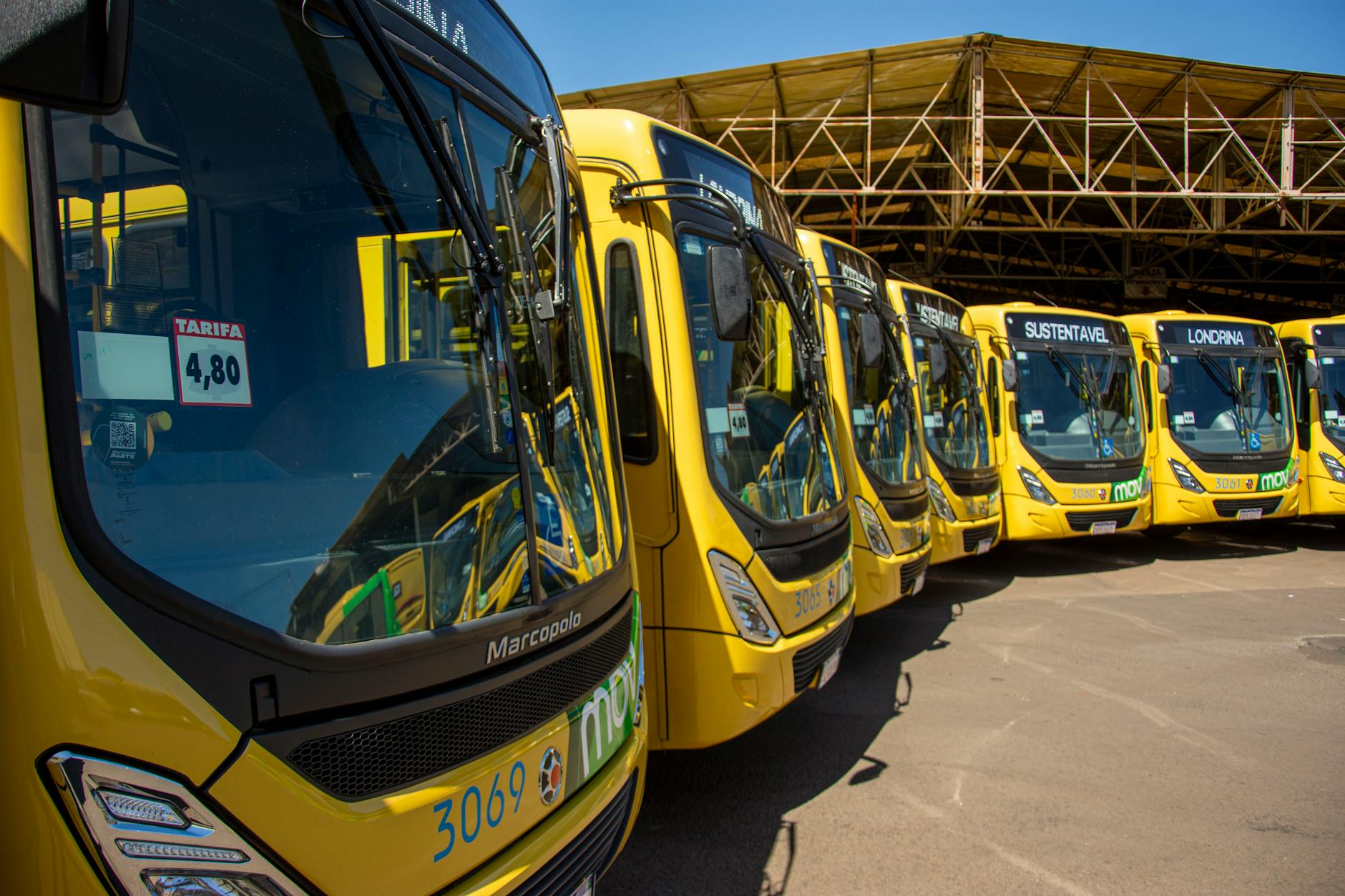
We clearly need to nationalise all of the bus companies in order to make up for lost time and investment over the last decade or so we could and should have been acting. Our situation is actually now so bad that we’re being overtaken by countries that the vast majority of people in this country wouldn’t expect. In this particular scheme in Dakar, the Senegalese government controls 30% of the project. They’re not even fully nationalising the buses. They’re doing public / private partnerships. I may not like PPPs; but at least these politicians aren’t just saying they’ll do it in future to score political points now. They’re doing it now. Because they actually want to reduce pollution and car ownership. They seem to care about the material conditions of their constituents, which is a foreign concept in this country. Only Jeremy Corbyn and Zack Polanski in recent times have been able to break through and made people believe that they care about them and their lives. And even then, there’s a long way to go in that regard. A lot of British voters or non-voters tar all politicians with the same broad brush. Part of that is laziness, but a lot of it is genuine hurt at being let down so many times in the past.
Unlike the traditional establishment Labour and Tories in this country; who have forgotten who they’re supposed to be serving; these Senegalese politicians understand that it helps to do things people like if you want to get re-elected. That way, you don’t have to resort to lies and dirty tricks on the campaign trail.
It goes without saying that I’d rather avoid any private involvement in our essential public services. But this shows that even under that sub-optimal situation, you can still improve things massively for people. And it really shows how fucked up Britain is. Public / private partnerships (PPPs) are as far as I’m aware, universally associated in this country with profiteering and falling standards within public services. Higher prices, less frequent services, older, more polluting, less efficient vehicles. Perhaps most notoriously, worse healthcare in the NHS; to briefly broaden out beyond the scope of this article.
Private involvement always makes things inherently worse. But especially in the UK where there’s so much corruption. The Japanese railways are privatised, and they work well. That says a lot about how well Japanese society functions compared to ours.
Trains
Railway “nationalisation” has been gradually ongoing for years now, since the Tories were forced to bring franchises including LNER (formerly Virgin Trains East Coast) and Northern into public ownership. Labour pledged to go further and nationalise all of the train operating companies as their contracts with the government run out over the coming years. This doesn’t seem like a bad policy on the surface. But as usual under neoliberal governments, it doesn’t go remotely far enough. It doesn’t include the rolling stock leasing companies; which charge the TOCs for the use and maintenance of the trains they operate on the network. This is a ridiculous middle-man situation and these parasites should be immediately kicked out of the system. British Rail used to do it all in-house, and we can again. Speaking of British Rail, that brings me to the name and livery. I know these seem like trivial things, but I think it does matter. You want people to feel pride in their transport system and the vehicles that run on it. You want them to think it’s a desirable way for them to get around so they ditch their cars.
With that said, we have to talk about Great British Railways – which to me comes across as a Trumpist, flag-shagging name for authoritarians. Hence why the Tories came up with it, and why Keir Starmer is happy to keep it. Have you seen that extremely tacky livery that they’re bringing in across the network? One of my favourite video games, Train Sim World, helped out with the announcement; using the in-game livery editor to bring the god awful concept to life. There was nothing wrong with British Rail. It was simple, classy and understated. It didn’t give off nationalistic overtones. It was comfortable with what it was. Just like the British people historically. That’s what’s supposed to make us special. We don’t feel the need to express a level of national pride that makes other countries around the world hate us; as has always been the case with the United States; and especially now. (I wrote that sentence before the illegal and disastrous Iran war by the way).
I would return it to being called British Rail, and I’d reinstate all the same regional names and liveries as they were before the Tories ruined the system by underfunding and then privatising it. BR Blue, Network SouthEast, Intercity, Regional Railways etc. Not exclusively to piss of the right wing. I do really like those liveries. But it would be a nice added bonus. I’m not averse to a bit of childish pettiness if it annoys all the right people. Especially after the endless policy misery and societal decline we’ve had to endure since before I was born at their hands. And the fact that right wingers seem to think of politics as purely a game. While we suffer emotionally (from listening to their bullshit endlessly) and physically from the damage they inflict on all of us, and vulnerable communities especially; they don’t care at all. It’s all just a strategic game and nothing more as far as they’re concerned.
As far as other substantive changes I’d make – I would obviously increase investment in the rail service as much as possible to bring it up to the standard it should be. It’s hard to put a figure on this. But given how much money has been wasted through privatisation, it wouldn’t be difficult to fund it how it always should have been and make up for lost time. I’d roll out battery trains on all branch lines in the country. The newly refurbished Class 230 former D-Stock Underground trains recently came into service, so it’s certainly doable. Whether via these types of refurbs, or with brand new, purpose built battery EV trains, I don’t really mind. Probably a mixture of both.
I’d finally place OHLE (overhead line equipment for you non-train nerds) over the full length of the Midland Main Line and the Great Western Main Line; as well as any other mainlines which aren’t suitable for battery trains. I generally prefer battery trains where at all possible because I feel as if OHLE is inherently vulnerable to worsening extreme weather. It just doesn’t make sense to build infrastructure in 2026 that’s going to be vulnerable to heatwaves and storms if we can avoid it. But I think battery trains aren’t ready for the mainline yet. I suppose it might be possible to rapid charge at stations, and avoid building the overhead lines everywhere along the route. That would be something to look into if I had my way right now. I suppose the truth is that what I want isn’t going to happen any time soon. And therefore, by the time we actually get around to electrifying these mainlines, battery and charging tech for fast trains will likely be ready for that application. Until then though, we should increase our deployment rate for battery trains on branch lines. That’s definitely something that even the current do-nothing Labour government could easily make happen.
As far as other parts of the network; I wouldn’t scrap HS2, because I think it’s come too far to go back on, but I would try and make changes to how it operates. I’d seek to change the design of the trains if at all possible to make them cheaper, slower (which has become topical since I initially wrote this); and less vulnerable from slight damage to the track. The higher the speed, the more danger there is from tiny track warps or other damage that could be exacerbated by higher forces being put through the rails. I would also seek to run more sleeper trains. Especially to Europe. We gave up on the idea of the Night Star sleeper through the Channel Tunnel before it was able to come into existence. That was a great idea and shouldn’t have been given up on so easily. They should have persevered.
Cycling and Walking
Just 2% of the UK transport budget goes on cycling and walking infrastructure improvement as of 2024; which was the most recent stat I was able to find. This is a truly pathetic amount given how much we’re lagging behind European countries. Here, 1 in 5 people cycle, wheel (use a kick scooter, or maybe wheelchair), or walk daily. Whereas in Europe it’s 1 in 4 on average. And presumably that means that some countries are seriously outperforming us by a much bigger margin. But the report linked to above by the IPPR charity doesn’t break it down by country. I also find it quite scary how they lump walking and wheeling in as well with those stats. That really paints a miserable picture of an inactive continent.
The report also breaks down the spending per head for cycling and walking in the country. It equates to about £24 per head in London, and £10 per head across the rest of the country. It also states that £35 per head would be enough over the next decade to build a decent amount of infrastructure. I would frankly double it to at least £75 per head if we’re really going to be serious about this. I think talking about specific amounts at this point is almost pointless honestly. Cycling has been so underfunded and so deprioritised for so long, that all we need is a shit-ton of cash, and the desire for change. Neither of which we have right now.
That report from 2024 sums everything up so well, that I don’t think I have much to add. I especially liked this one powerful quote from Maya Singer Hobbs, senior research fellow at IPPR:
Cycling in the UK peaked 75 years ago. Since then, UK government policy has locked in car dependency, making people walk wary and cycle cautious, at the expense of our health, our environment and our economy.
What more do you really need to say? I do see people cycling. Even outside the house, next to the speeding cars, forced onto the uneven and slow pavement, defiantly riding bikes in a country that actively hates people doing it. Speeding, distracted, drunk, or raging drivers; or any combination thereof will undoubtedly find you wherever you are, if you happen to be cycling in the UK in 2026. I honestly don’t think any of that is an exaggeration.
I mentioned earlier a few simple things we can do. Turn parallel side roads into bike lanes, create more LTNs in carefully chosen locations, and talked about the potential for local car restrictions or bans. Things we can do with very little funding. Improving public transport is probably the biggest opportunity that could revive cycling for transport; because I don’t think the public in such a fascist country with such awful media would support cycling infrastructure first.
Even in my ideal world, I don’t think you would be able to invest in cycling significantly until you encourage people out of their cars through other means first. Perhaps once trains and buses are nationalised and become legitimately affordable and desirable for people to use; they’ll become open to getting rid of their cars and be more willing to cycle on the quieter roads that come as a result. And if you combine that with the more simplistic cycling infrastructure I mentioned above, I think you could make big changes within a few years. But you definitely couldn’t go straight in with huge cycling infrastructure investment, and tear up roads to put in Dutch level infrastructure. That would cause riots in the country.
At the end of the day, it comes down to a societal culture change. The number of new cyclists right now is so low. It’s been that way for decades, and it won’t fundamentally change until the cars aren’t there. Or at the very least they’re slower, smaller, less frequent, and driven by people not in fits of rage thanks to our broken neoliberal economic system.
To be frank, it’s pretty shocking that we’re able to get around at all in this country, given the myriad of disastrous decisions that have been made over decades. That kind of gives me hope. The fact that even in this utter shit-show of a country, you can technically still get around, shows how much better it could be if we actually did something right. I was going to say at least it can’t get any worse. But now I’m starting to think about all the ways it could under a fascist Reform UK government. That can never be allowed to happen. or we’ll end up like the United States. I wouldn’t wish that fate on my worst enemy (who doesn’t already live in the United States).