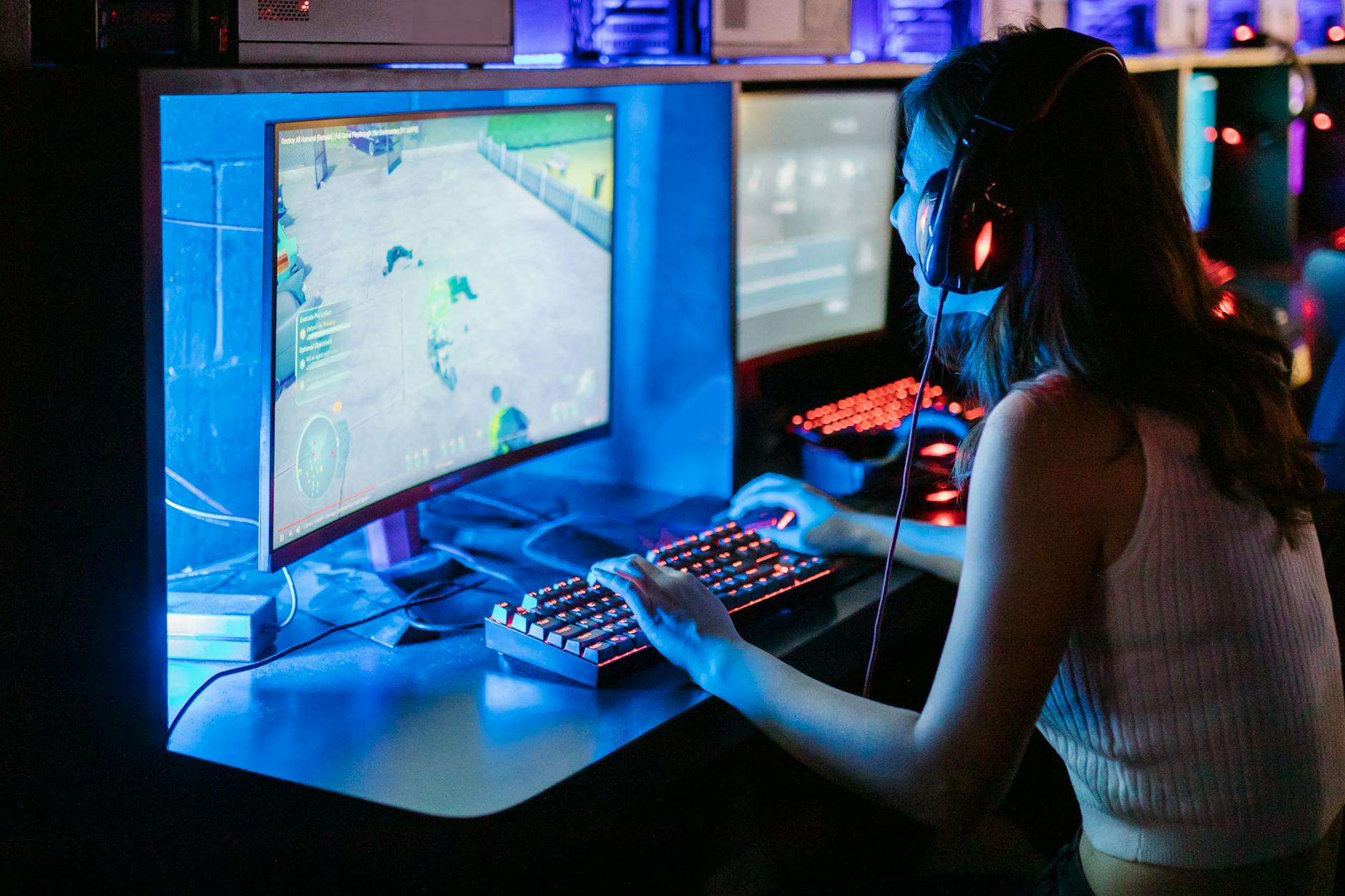
I’m not a streamer myself, but I’ve always been a fan of what I perceive to be the authentic nature of live streaming as a medium. Especially when it’s coming from an individual or small organisation, rather than from mainstream media or a corporate entity. It’s the same when it comes to recorded videos on YouTube too. Sometimes complex editing and additional graphics are important. But often times, one unedited take of one person in a room talking can be the most effective means of communicating a message; and definitely the most authentic. Streaming frequently has moments like this, and that’s a big reason why I’m drawn to it. Along with it being off-the-cuff in the same way an unedited video would be. Come to think of it, you very rarely see unedited YouTube videos these days. We live in a time of excessive editing and short, snappy videos (although the attention spans are getting too short even for these to be effective). You very rarely get someone talking in a room for 30 minutes, but you do in the streaming world. And it’s always going to be that way; because even the streamers who pack the most activities into their streams are going to have quiet moments. Times when they’re travelling to a different location, or in the hotel room, or when setting up the next scheduled highlight of the day. You can’t always be doing an activity during a 12 hour stream.
The problem with streaming though is that while you gain in simplicity and authenticity, you lose in terms of having to put up with the worst of individualism and capitalism on the internet. If you look at platforms like Twitch and Kick; especially these days, you’re unlikely to see much other than people with “dono goals” for a trip, or a car, or some other item they’d like to have but don’t really need. And even if they need it, they shouldn’t be directly asking the chat to pay for it. There’s a lot of entitlement. A lot of fake, shameless people, and very little authenticity going on aside from those in-between moments – though there is significant variation. And it seems like this dominant form of streaming impacts practically everyone in some form. There have been countless examples of people who start out very innocent, nice and humble; who end up years later poisoned by the toxic, right wing streaming culture.
It’s like reverse busking. If you’re busking, you don’t ask passers-by to pay you money before you start playing. You play your music and people donate if they like it. Streamers should know this better than anyone else, because quite a few of them are busking musicians / performers themselves. But when they get home, they forget that, and put up a progress bar asking for $4000 to pay for their next overseas trip.
Of course, living in the age of extreme neoliberalism that we do, earning money is much harder than ever before. So I understand the sponsorships, the dono goals, and the constant pushing for more subs to some extent. And especially gifted subs given the extreme nature of inequality in 2026. It’s close to impossible for small streamers to get by without millionaires making regular, sizeable contributions. Especially if they’re not living with their parents. So I do sympathise somewhat, depending on the streamer in question and how they operate. Despite the fact that I hate a lot of what goes on, and how dumbed down and individualistic everything has become.
But what do you do if you’re like me personality and values wise, and you also want to stream? How do you square that circle?
I think the first thing you would have to do is be ok with never having much money (even less than the streamers scraping by with support from rich individuals and corporate sponsors). If you’re an INFP or similar personality type like I am; then that’s probably not going to be a problem to accept. Although, having said that, some INFPs end up with more libertarian politics than socialist. I suppose those people should probably go elsewhere if they’re reading this. It’s unlikely to be for you. Along with any other committed right wingers who have stumbled on this article.
As far as how you actually run a stream ethically, once you’ve decided on doing so; you have the following areas to consider:
- Category
- Monetisation
- Community / Culture
These are the main, most important elements of an ethical stream that come to my mind. It’s perhaps not an exhaustive list. But these three cover more than enough to make a socialist / communist feel as comfortable streaming on Twitch or similar platform as you’re ever going to be in this end-stage neoliberal world.
While I personally have no experience of streaming, I have watched a lot of different streams and streamers, and I’ve learned a lot about the capitalist streaming world and how to make the best of it while maintaining your dignity. Therefore I hope I can offer some useful tips on how to go about it.
Category
While you could stream in an ethical way playing games or as a kind of local IRL streamer; depending on where you go, how you get there, and what you do there; it would be next to impossible to be an IRL streamer who travels frequently. Especially if it involves flying. Someone like Jinnytty couldn’t maintain her current jet-setting lifestyle while trying to be ethical and sustainably minded. In the current paradigm, you’d be relying on huge individual donations, and would obviously be responsible for massive emissions created by flying, buying and replacing items you frequently consume, break or lose. The types of things you don’t need to buy or replace anywhere near as frequently when you stay more local to where you live.
As far as particularly suitable categories in order to ethically stream, here are a few that come to mind.
- Socialist politics
- Local independent news / citizen journalism
- ASMR
- Music
- Art
- Other creative pursuits
Socialist politics is an obvious one, because that’s kind of what someone like Hasan Piker already does as one of the biggest streamers in the world. I wouldn’t personally promote socialism while living in a mansion, but that’s a personal choice. I don’t want to harp on that point. Fundamentally, Hasan does a great job these days, with a lot of pressure on his shoulders as almost the sole voice of the left in the mainstream. He eliminated ads on his channel, and he doesn’t do any kinds of dono goals or rewards for gift subs or anything like that. He just gets on with the job and streams for 8 hours a day. In terms of the stream itself, it’s hard to fault it. He did obviously run ads before, so I would personally criticise that as a socialist / communist. It’s wasn’t exactly a decision to agonise over by the time he made it; when he was getting so many subs during the broadcasts. Clearly he doesn’t need the ad revenue these days. But I did hear anecdotally that the biggest streamer on Twitch was running 20 minute ads per hour, which I believe is the highest you can select. That’s the same as big budget TV broadcasts run. Clearly that shows a huge ideological divide in favour of Hasan. So even if I would not use ads from the beginning, there are people hugely worse than Piker, and clearly operating in a greedy fashion. In terms of travel, he does fly quite a lot, but when it’s for something as important as political events, speeches and campaigning, I think it’s clearly justifiable. Even from my perspective, as someone who doesn’t fly and tries to reduce my own consumption as much as I can.
The other categories I mentioned are relatively affordable, low consumption, and don’t require significant carbon-intensive travel. While ASMR and local journalism don’t really require significant investment – A pretty basic microphone and camera is ok for ASMR; and a phone and a bicycle for local / citizen journalism; music and other artistic endeavors do tend to cost quite a bit of money for instruments, computers, audio equipment, additional cameras, amps, headphones – maybe even a place to play.
I tend to always give music and the arts in general a pass when it comes to sustainability and consumption. I think more art in the world is always a good thing. Especially when right wingers across the world (and especially in the UK) are constantly defunding and attacking it. I’m more willing to compromise my principles for the arts than in any other area. For that reason, I’m more accepting of different methods of monetisation too.
Monetisation
There’s a South Korean all-female rock (and most other genres) band / streamer group. They stream almost every day on YouTube as well as a couple of Korean platforms I’m not familiar with. Most of their streams seem to be with 1 or 2 of the band members; but sometimes they do full band streams, local IRL streams with all the members, and also upload videos of them performing covers of various songs. Some of these may not be directly captured from the live stream though. I’m not entirely sure. Because of the time zone difference, I’ve not managed to see them performing a cover live yet.
But even if none of their covers are performed live on stream, the point still stands that music is an expensive endeavor, and so it justifies additional forms of monetisation that I would otherwise be opposed to. For example, they have channel memberships on YouTube, and some of the tiers are relatively pricey compared to some others I’ve seen. It also places previous livestreams and some other exclusive videos behind a paywall. Normally, I would always want to avoid paywalling anything, and balk at the idea of relying on wealthier people. But at least the funding is coming from individuals directly supporting the streamer(s). And it also means you don’t have to go down the corporate sponsorship route, which is far worse. And for a band that aren’t recording and releasing their own music in the traditional way – at least not yet, it makes the most sense. Especially because ad revenue seems to be poor these days on neoliberal platforms. It’s not nearly enough to support smaller channels. This is why we’ve seen the rise of Patreon, and later YouTube Memberships in response, as a away of fixing their own platform, and make it viable for smaller creators.
To provide a more idealistic model that I myself might consider if I ever got into political streaming; I think the first thing I’d do would be to eliminate or discourage methods of donation which promote inequality as being a good thing. I would want all of my donors to be paying the same amount, or nothing at all. Most streamers I’ve seen use external services connected to their Twitch accounts, such as Streamlabs, Stream Elements (which I’ll get back to later), Prism or Toonation. Sometimes 2 or 3 of these at once. These allow you to bypass Twitch’s virtual currency, Bits, and donate directly with actual money. These offer significantly lower fees as well for the streamer.
I would ideally prefer to avoid using these external platforms, just for the sake of simplicity, and to make it harder for people to donate larger amounts. But realistically, I’d have to choose one to use in addition to Twitch Subs and Bits. At the same time being clear that I want to discourage donations larger than $5-10 or so. You have to take into account the much larger cut Twitch takes – 30% for Bits and 50% for Subs! – except for big streamers who get a 70 / 30 split. This should be reversed. Small streamers should get a bigger share because they actually need it. This is compared to other donation options (whose cut is around 3%!). It is also the case that Twitch have to pay for the actual running of the streams, whereas the others don’t have anything like those costs of operation. Taking that into consideration, I kind of feel a bit bad for Twitch, since there’s not much they can do about it. If they were to ban external payment integrations and alerts, people would probably just use those external services anyway, but without alerts. I don’t think they could push streamers into using their internal system, unless they provide perks that are fair for everyone, not just large streamers. I’m not usually one to defend corporations. Especially those owned by Amazon. But in this case, it definitely isn’t a fair playing field.
Obviously, if we ever get a socialist / communist system and you could nationalise Twitch, all of these problems would go away. But for now, they have an in-built disadvantage, and it’d take significant smart design to mitigate this. They’ve made a small attempt at this with the Hype Train mechanic, which incentivises the chat to raise the level by donating more subs and Bits. When combined with other external layers, such as this interactive AI music generator I’ve seen being used by HAchubby in particular; it can be extremely effective in giving the chat an incentive to keep donating Twitch currency to reach higher levels and unlock new songs (the lyrics of which are based on AI learning from what streamers say, and from the chat’s topic and genre suggestions; and therefore can be very entertaining). The problem is that Twitch don’t offer streamers any bonuses for reaching higher levels, other than the value of the subs and Bits themselves. They need to go much further and make it so higher levels of Hype Trains at least reward streamers with a bigger cut of the donations and subs. And again, make it a bigger effect for smaller streamers. This would help to offset the fact that Hype Trains inherently disadvantage smaller streamers who don’t tend to receive flurries of subs and Bits like larger streamers do.
It’s another instance in which as a socialist, ethically minded streamer, you just have to make the best of the imperfect situation we currently have.
TTS (text-to-speech) is a very commonly used function for Twitch monetisation, which incorporates the donation system via Bits, or the external payment services, to allow people to pay usually $2-3 and have their message read out by a very strange British male computer voice, from the era before modern AI voices. Toonation (Korean service) and some others also give you many different AI voices to choose from, rather than the default. TTS can be fun and adds something unique to Twitch and similar streaming services, that set them apart from other types of live streaming. Namely the vertical video apps, like TikTok and Bigo Live. In my research for this piece, I connected my Twitch account to Stream Elements. I found that not only can you restrict the maximum donation amount via their tipping interface; but you can also set up a custom TTS using channel points, via their “Stream shop” menu. This was much easier and more comprehensive than I was expecting, and I would definitely use it myself if I was going to actually stream. I’m tempted to try out these tools and their overlay designer. Maybe one day I’ll get around to it. I was surprised how intuitive it was compared to even Stream Labs and other tools I’ve previously played around with. Based on everything I’ve seen of the other external payment and platform services, Stream Elements seems to be the most convenient and beginner friendly. I really appreciate the ability to set a maximum donation amount in particular.
As far as so called “Mission Roulette” and other similar games, in which viewers donate usually larger amounts of money, in order to have a random roulette style draw of forfeits for the streamer; it’s unfortunately not so easy. The idea of it is to do give the streamer an embarrassing forfeit they have to do either on the spot, such as exercise, sing, dance etc – or bigger challenges, like 24 hour streams or subathons; albeit with a low chance of them being selected. This can be entertaining, but I also don’t know how you would implement it for a low cost without it going off constantly. There are things you can do with channel points, but it’s definitely not as straightforward as it was with Stream Elements to set up small dollar tipping and channel point TTS. Streamer Bot seems to be the best option from my research, but it does take a lot of technical knowledge to set up. I wouldn’t try it myself after reading through their website for a while. But at least it’s an option if you really think your stream would benefit from this type of interactive functionality; and you don’t want to wait for someone else to make it user friendly. There’s no likelihood that Twitch will directly implement it under capitalism when there’s no financial incentive. But it’s good that you can make it work if you have the patience and skill.
Community / Culture
From my perspective, this is the easiest part. If you’re a clearly principled, socialist streamer, you’re naturally going to attract viewers with similar values. You see this across the board if you watch enough different streamers. The chat always ends up reflecting the personality of the streamer. Though this can also create problematic echo chambers.
You’ll probably also attract a lot of curious people (who could potentially learn socialist values) and hate-watchers too (if you’re doing politics specifically). But the haters will either get bored, or you and your moderators can take action against them. There are chat options such as follower only mode, or even subscriber only mode to experiment with, or implement temporarily. But failing that, you can mute or ban individuals if all else fails. I would rather not have to resort to bans. I’d prefer to engage with them, as long as they’re not being disingenuous. I’ve wasted a lot of time in my life arguing with, or trying to persuade disingenuous people. It’s a total waste of time. They twist everything you say into their preconceived world view. So definitely spend a bit of time figuring out if someone is genuinely open minded before wasting any further time on them. When you do come across someone who is willing to have their mind changed, it can be a really enjoyable experience. But it’s rare in 2026.
The other important thing to remember; going back to echo chambers; is to always refer to the facts, and not just take your chat’s word for something. Always critique yourself and have open conversations with your viewers. That way you can avoid the sort of toxic groupthink you see all over Twitch, on the right generally, and especially on platforms like Kick.
Conclusion
I don’t think the status quo has much longer to run. Viewers are tired of streamers pressuring them to give more in this reverse busking situation. I think viewers are also yearning for simplicity rather than grand productions, always chasing the biggest possible spectacle. That’s part of the reason Twitch surged in popularity during the pandemic lockdown years. People just wanted to feel a connection to someone to make them feel less lonely. A lot of the streams were just other people at home too, and they had record viewership.
The continued dependence on rich donors is also not tenable for much longer. Especially when a lot of streamers put VODs behind a subscriber paywall. Regular viewers won’t be able to afford to subscribe to more than a couple of channels. This means that if there’s a streamer you like to watch in a different time zone, and they go live when you’re asleep; you have to pay to catch up with the VOD. But you can’t (and shouldn’t have to) do that for every streamer you like. I’ve also seen streamers who have most of their viewers on the other side of the world, and yet they don’t make VODs available at all, which makes no sense to me. A large part of being a streamer to me is making yourself available to your viewers / community, rather than closed off from them. If you’re not comfortable sharing your past streams with the world, then streaming probably isn’t for you to begin with.
Streamers overwhelmingly focusing on their rich donors, who make it hard or impossible for the rest of their fans to access them, will almost certainly lose followers and relevancy. And there are too many people currently at risk of that scenario.
I really hope we see a new generation of streamers going about it in a similar way to what I’ve laid out in this article. I certainly don’t expect it to happen because of what I’ve written. But I definitely think we are going to see it – because frankly we’re pretty close to rock bottom now in terms of streamer ethics. Change to a more ethical and wholesome streaming experience is inevitable at this point. It won’t happen overnight, but it is coming sooner or later.