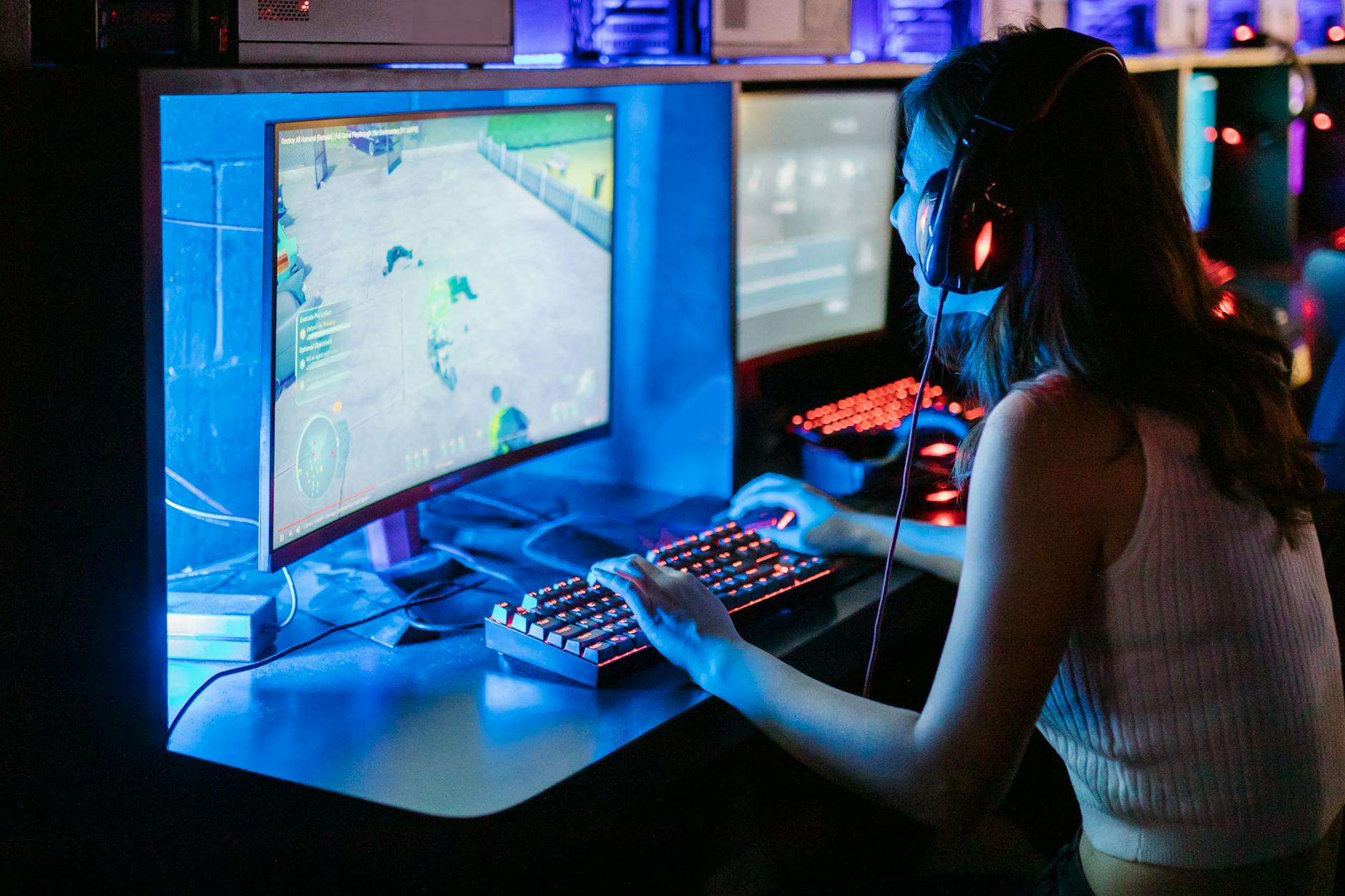
In the past, I used to play PC games quite a lot. I played MMOs like World of Warcraft and Star Wars: The Old Republic a lot for example. I played StarCraft and other RTS games quite often too. But for the last 5-10 years, I’ve been almost exclusively a console gamer. As in pretty much TV and controller only. I tend to leave my Switch, and now Switch 2 permanently docked. I don’t really like the feeling of the post DS / 3DS / PS Vita mainstream handheld offerings from Nintendo, Valve, and a handful of others, including Microsoft through their partnership with ASUS. They’re all big, heavy and bulky. The point is, I mostly gave up on PC and Mac gaming for a variety of reasons. I was frustrated by cost, reliability, complexity (of hardware, of multiple storefronts); and above all, feeling held to ransom by Microsoft and their Windows OS if I want to play games.
I want to get into the situation with computer gaming now, where I think it’s going, and where it needs to go to become worthy of the gamers who spend our money and time on this hobby. I’m not going to get into the free to play model which I absolutely hate. That can come in another blog, although it’s almost not worth touching on because there’s not much to say other than we all hate it (or are lying to ourselves) and it should burn in hell. I want to focus on hardware, operating systems and storefronts.
So with that said, let’s talk about operating systems.
Windows 11 isn’t the worst in terms of design, I will admit. I like the central start menu. I like the way the windows look and the minimise, restore and maximise buttons. I find them easier to use than the small buttons on Mac. I even like the default blue ribbon wallpaper design. But that’s where the love-in ends. Beyond that, it’s bad. You can get rid of a lot of the nonsense ads and clickbait news, simplify the start menu, and remove co-pilot and the search box. But you can’t get rid of the sluggish performance or Microsoft’s poor policies on data collection. People deserve a good alternative to Windows that’s snappy, lightweight, and respects your privacy. When our 16 year old Dell XPS wasn’t eligible for the Windows 11 upgrade, and security update support was about to be ended, I thought I might as well try installing Ubuntu again. It had been a long time since the last time I tried it (funnily enough, about 16 years; just before we got said Dell), and I was impressed. Everything seemed to work out of the box. The wi-fi, video in web browsers. All the web apps we’ve become so used to, that previously we might need a plugin for, or go through some other hassle in order to get them to work in the past.
I installed Steam because of course I was curious if our old PopCap games would run on Linux, and most of them did. The problem came a month or so later when something seemed to have gone pretty badly wrong. There were repeated icons for those games listed in our user accounts under the software list that seemed to multiply by the day. Then Ubuntu started having real problems booting, until eventually the whole OS seemed to be corrupted and I couldn’t do anything.
At that point we had a think about what to do next. I had a look on the Steam store, and it seemed to indicate that those old games were playable on Mac, so I started thinking about whether a basic spec Mac Mini would do for the next few years or more. We decided to get the Mac, and upon setting it up and installing Steam, promptly realised that the Apple logo next to the game names were referring to old Intel-based Macs, and that Apple Silicon is not supported if you want to play old 32-bit games. To be fair, that was my own fault. But if someone like me, who’s usually very detail oriented can make that mistake, it’s easy to imagine many others have as well.
Then, I thought there was no harm in having a punt and installing Windows 11 via a trial of Parallels (Mac virtualisation software). To our great surprise, those old 32-bit games ran fine in the virtual machine. I really wasn’t expecting that, given that they’re designed for 32-bit Intel / AMD processors; and definitely not Apple M-series chips. The problem then obviously is that you’ve bought a Mac for £600, and then you have to spend about £60 annually on a Parallels licence, and £200 on a Windows 11 Pro licence, just to play a handful of 15 year old games. For not much more than that, you could buy a Windows 11 native mini-PC from Geekom or similar. And if you bought a PC for the cost of all of those items together (£860-ish), you almost certainly could run many modern games at decent settings at 1080p.
At this point, I was starting to think about getting back into PC gaming properly myself, but we were stuck with a base model Mac Mini with very limited storage and RAM for modern gaming, and running MacOS; which itself still has limited support from most game developers. The only real option available to me was to play the relative handful of Mac games that I can fit on the 256gb of storage, and will run well. And beyond that you’re limited to streaming (GeForce Now, Luna or Xbox Cloud). So then you’re forced to pay money to some of the least moral, or most environmentally damaging companies out there, or watch ads in the case of Nvidia’s service. GeForce Now is the one I prefer of course, because it integrates with Steam. This means you own the games for the future and can play them on your own hardware as well. This is a decent stopgap solution, but I don’t think we should be reliant on big corporate data centres in future, especially as prices keep climbing because of AI and neoliberalism. I want to be able to play on my own hardware ideally.
But then what would happen if I wanted to try Linux for gaming now? Well, to be truthful, I don’t know. That’s the problem with traditional Linux. Very little is truly user friendly when it comes to games. It always seems to be guesswork as far as compatibility with traditional Linux distros like Ubuntu and Fedora, and especially when it comes to the more “boutique” distros designed for gaming, like Bazzite. I had a look on their website and to me it comes across as an OS for tinkerers and not the general public. Basically, the situation for regular people who want to own their games and play them on their own computer hardware (that’s not Windows), and have a wide selection, is not good. That is if you don’t factor in Valve’s activities.
Thank god Valve (Steam) exists. If it weren’t for them, gaming in general (and especially those of us who play and spend our money) would be so much worse off. Their Steam Deck; while it’s not something I’d like to use as I mentioned before, I can appreciate that it has put developers, publishers and console hardware makers under pressure to have more consumer friendly practices; and forced many of them to support Linux hardware in order to access that Steam Deck installed base. And obviously it’s provided many players with a great handheld gaming experience.
Their upcoming Steam Machine (console / PC hybrid / GameCube tribute) is another huge deal that piles yet more pressure on the rest of the industry. A lot of people will hopefully be buying this thing, and they’re going to be expecting extensive support for new games. And the fact that the device is relatively modest hardware spec wise (or it certainly will be in a couple of years time), that also bodes well for many gamers without the cash to keep upgrading; but who still want a PC experience with keyboard and mouse support, and an actual desktop OS as an option. As well as the rest of us who want to use our similarly modest hardware for as long as possible. It will increase the pressure on developers to keep the system requirements low as long as they can.
So, if I was going to get seriously into PC gaming again now, what would I do? Honestly I wouldn’t buy or build a high end gaming PC and eschew Windows 11 for any Linux distro. I just don’t think that’s an option for 99% of people yet. Hopefully that changes soon. I also wouldn’t want to compromise my principles and buy a Windows 11 PC. I would either get a Steam Machine, or just continue as I am with cloud gaming and a handful of local games on the Mac Mini. That’s as good as you can do unless you’re a Linux expert and you want the hassle (or fun depending on your perspective) of solving the various inevitable problems that crop up.
I think in the long run, we need to be demanding a socialist gaming scenario. One storefront that’s nationalised and globally available (Steam), no DRM and true game ownership, maintaining free online play and features like cloud saves that are practically essential in today’s gaming world. We need to ensure games are maintained in the long run and preserved for future generations of players; with hardware built to last and be supported for as long as possible. We also need to see cloud gaming be democratised. Built for the people, affordable and easy to use.
We need to see less AI in gaming. That’s one of my big fears for the next generation of consoles; that they’ll try pushing AI where it’s not wanted and not needed, to try justifying a big increase in cost of both hardware and games. We need to make sure that doesn’t happen too, and fight back hard if they do try it. Gamers need to learn to vote with their wallets finally. People need the self control to be able to resist that latest blockbuster game and hold the developers and publishers accountable when their social policies don’t reach a level we can accept.
I suppose what I’m saying is, the best thing you can do right now as a gamer in this capitalist hellhole of a global society to bring about positive change, is to buy a Steam Machine if you want to support a better future. It sounds like a funny thing to say as an Ecosocialist, but it’s indicative of how right wing gaming has become. You have no choice but to participate in it. But at least this way you send the right kind of message. You can support a (is it social democratic?) company that has many policies that clearly outshine the competition in terms of consumer friendliness. Obviously, don’t buy one if you don’t need it right now. If you’re happy with your current hardware, or you’re happy as a console only gamer. But definitely consider Valve hardware when you do come to replace your gear.
And maybe by then, it’ll be much more reasonable for the vast majority of regular gamers who currently feel bullied into using Windows to switch over to either Mac or Linux. Linux probably the ideal, since it’s open-source, and there’s Steam OS. Maybe we’ll see a situation where gaming hardware manufacturers like ASUS ROG ship with Steam OS over Windows. It could happen. But even Apple do seem to be making progress now too after many years of stagnation, when seemingly only Blizzard were loyally supporting it. Razer have recently begun supporting Mac with their peripherals and accompanying software, and it can only keep going in this fashion. If Microsoft keep having trouble converting Windows 10 users to 11 (presumably 12 soon); and they keep stepping on rakes with regards to their Xbox policies that gamers hate, then this change could accelerate much faster than I’m expecting.
But certainly for right now, maybe just get a Switch 2 and a Steam Machine… Then you’ll have a great selection of games you’d get on PS5 and Xbox. But you’d also get a nice mixture of the affordable Steam sales, as well as the high quality Nintendo games, that probably won’t be affordable, but they will be good. That’s probably the ultimate socialist gaming setup for the time being. Obviously, the long term goal should be for all games, new and old to be available on all platforms; in a similar way to movies and music. And we need to see legislation to make it far easier and legal to run games past a certain age on any hardware you see fit. Right now it’s a sort of unspeakable dark art to run roms of classic games on new handhelds or other devices. We need to make that process seamless and normalised.


Leave a Reply